Top 10 Things to Do at Plitvice Lakes: Ultimate Activities Guide (2026)
Plitvice Lakes National Park isn't just a place you visit — it's a place that stops you in your tracks. Sixteen terraced lakes spill into one another through a labyrinth of 92 waterfalls, all wrapped in primeval beech and fir forests that shelter wolves, bears, and over 160 bird species. UNESCO granted it World Heritage status in 1979, making it one of the first natural sites in the world to receive the designation. And for good reason: the travertine barriers that form the lakes are alive, constantly growing and reshaping the landscape in ways that make each visit genuinely different from the last.
But Plitvice is more than a scenic viewpoint. It's a place where you can walk through canyon walls with waterfalls crashing beside you, glide silently across an emerald lake on an electric boat, hike a full-day circuit through forests where you won't see another soul, or kayak a hidden river canyon just 30 minutes away. Whether you're here for half a day or a full weekend, the experiences available in and around this national park will surprise you.
This guide covers the 10 best things to do at Plitvice Lakes — with the kind of detail you actually need: exact durations, costs, difficulty levels, the best time of day to go, photography tips, and insider knowledge that only comes from thorough research and local expertise. Let's get into it.
1. Walk the Lower Lakes Canyon Path
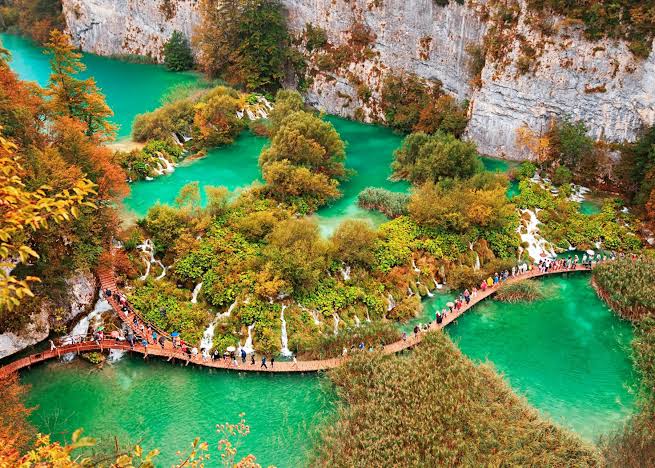
The single most iconic experience at Plitvice Lakes, and the one image that defines Croatia's most famous national park — walking the wooden boardwalk through the Lower Lakes canyon is the thing every visitor remembers most vividly. This is where the park concentrates its most dramatic scenery into a relatively compact, accessible route.
What to Expect
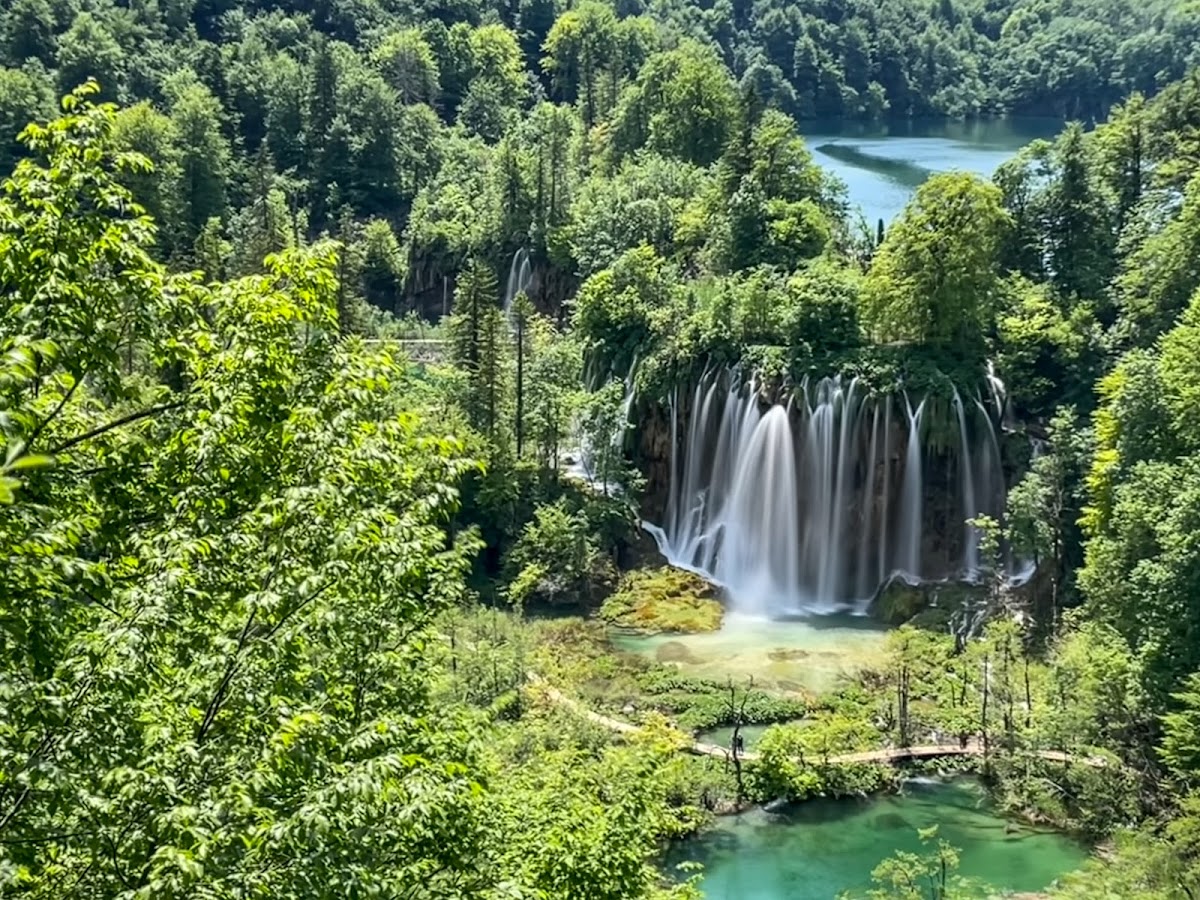
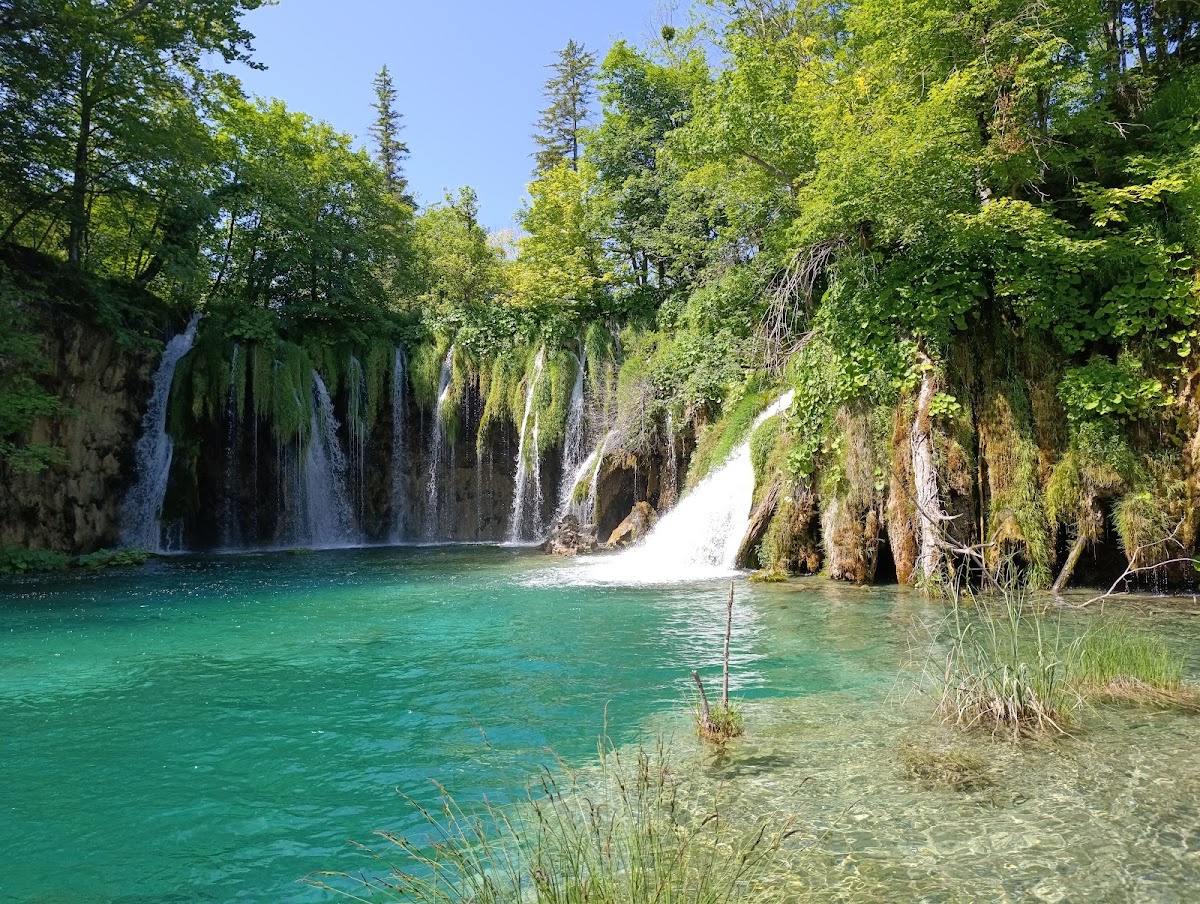
Starting from Entrance 1, you descend a zigzagging path through dense forest before the canyon opens up below you — and the view hits. Turquoise water so vivid it looks artificial stretches in every direction, hemmed in by moss-covered limestone walls rising 40 meters on either side. The boardwalk hugs the water's surface, sometimes mere centimeters above it, threading between cascading waterfalls that splash your arms as you pass.
The Lower Lakes consist of four main lakes — Milanovac, Gavanovac, Kaluderovac, and Novakovica Brod — connected by dozens of waterfalls and cascades. The canyon path takes you through all of them in a continuous walk. At the far end, you'll reach Veliki Slap (the Great Waterfall), Croatia's tallest at 78 meters, but we've given that its own section below.
The total walking distance along the Lower Lakes boardwalk is approximately 3.5 km one way, and most visitors complete it in 1.5 to 2 hours at a comfortable pace with frequent photo stops.
Practical Info
- Duration: 1.5–2 hours (one way)
- Difficulty: Easy — flat boardwalks with a moderate descent at the start
- Cost: Included with park admission (€10–€40 depending on season)
- Starting point: Entrance 1
- Accessibility: Boardwalks are narrow in places (approximately 1.2m wide) — wheelchair access is limited
Best Time to Do It
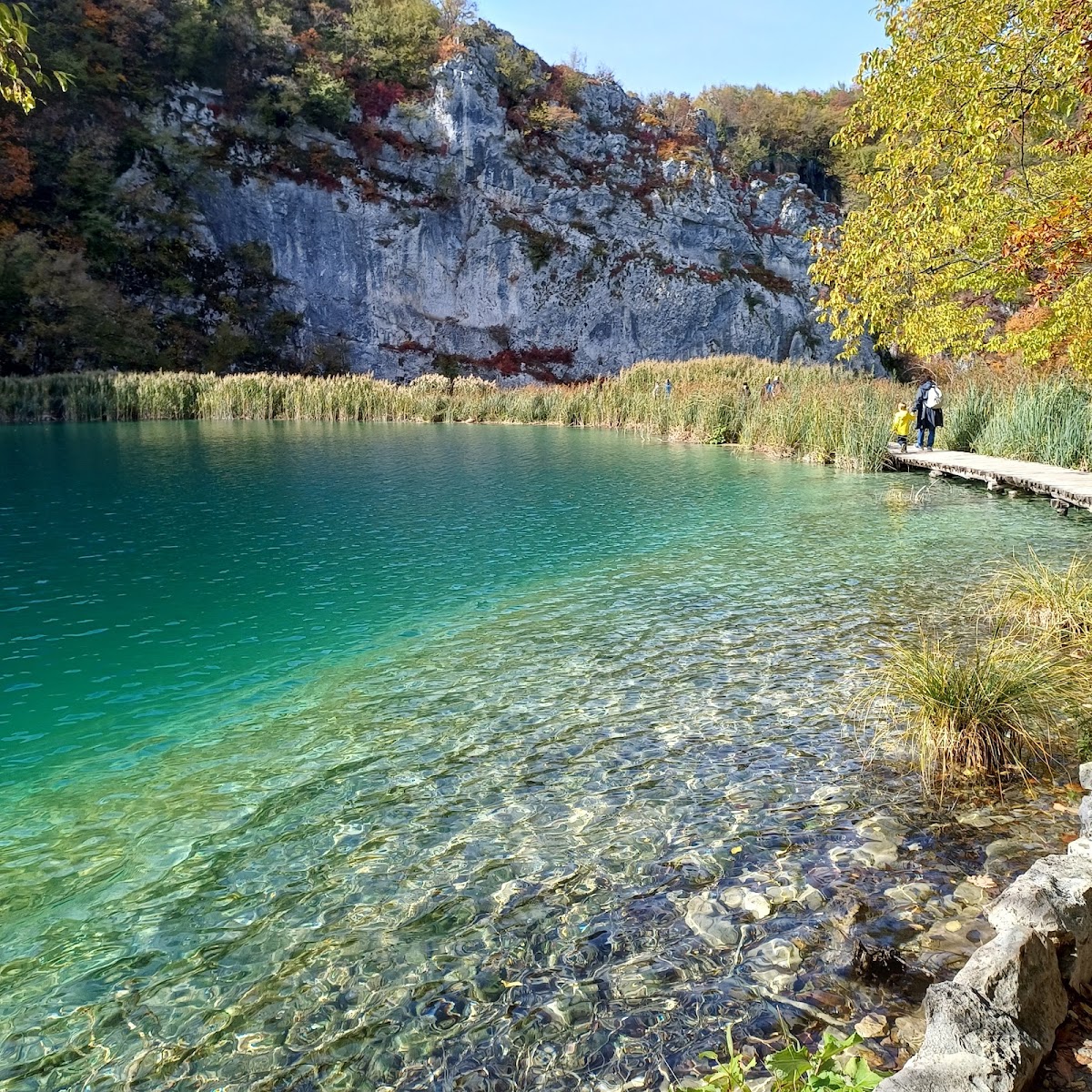
Arrive right when the park opens. In summer, that means 7:00 AM. The canyon faces east, so early morning light illuminates the water beautifully, and you'll have stretches of boardwalk entirely to yourself. By 10:00 AM in peak season (July–August), the boardwalk becomes a single-file shuffle. Spring (April–May) offers the best water flow from snowmelt and wildflower blooms along the canyon rim. Autumn brings stunning foliage reflections in the still pools.
Photography Tips
- Use a polarizing filter to cut glare on the water surface and reveal the vivid turquoise color beneath
- Shoot from boardwalk level — crouch low to capture the water's surface with canyon walls towering above
- Overcast days are actually better than sunshine here; harsh sun creates extreme contrast between the shaded canyon and bright water
- For long exposures of the cascades, bring a small travel tripod and aim for 1/4 to 2 seconds to create silky water effects
Insider Tips
Walk the entire lower section first before stopping for photos on the return. This way you'll be walking against the main crowd flow and can identify the best spots to photograph without the pressure of people behind you. The stretch between Milanovac and Gavanovac has the densest concentration of cascades — don't rush through it.
2. Explore the Upper Lakes Boardwalks
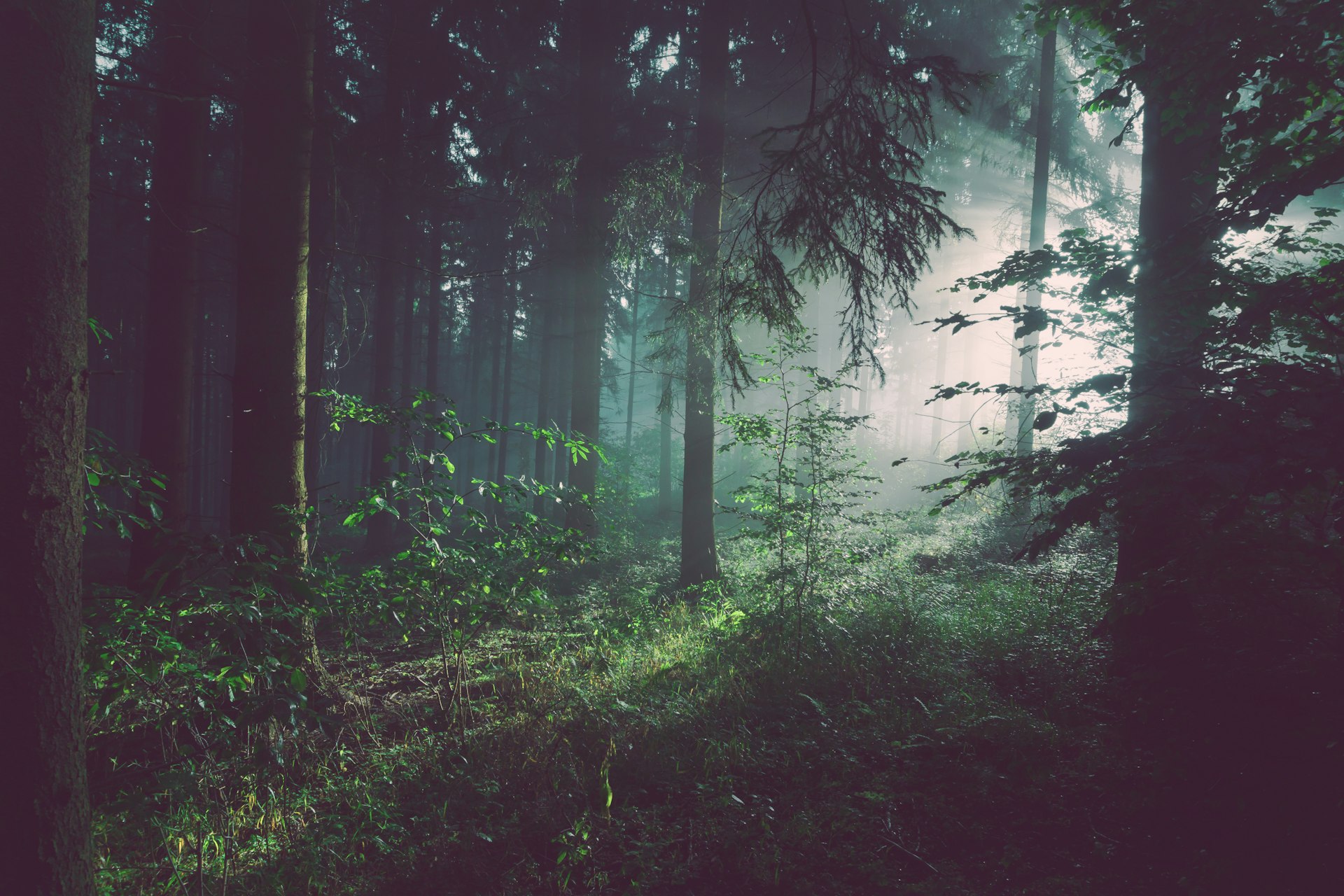
If the Lower Lakes are Plitvice's dramatic canyon, the Upper Lakes are its serene, expansive counterpart. The twelve upper lakes stretch across a wider valley with gentler topography, surrounded by dense dinaric beech forests and featuring a completely different character — deeper, calmer, and wrapped in lush vegetation.
What to Expect
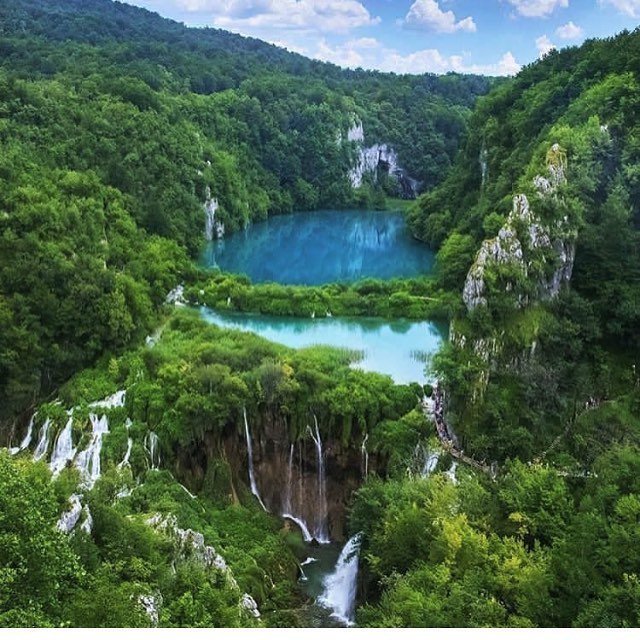
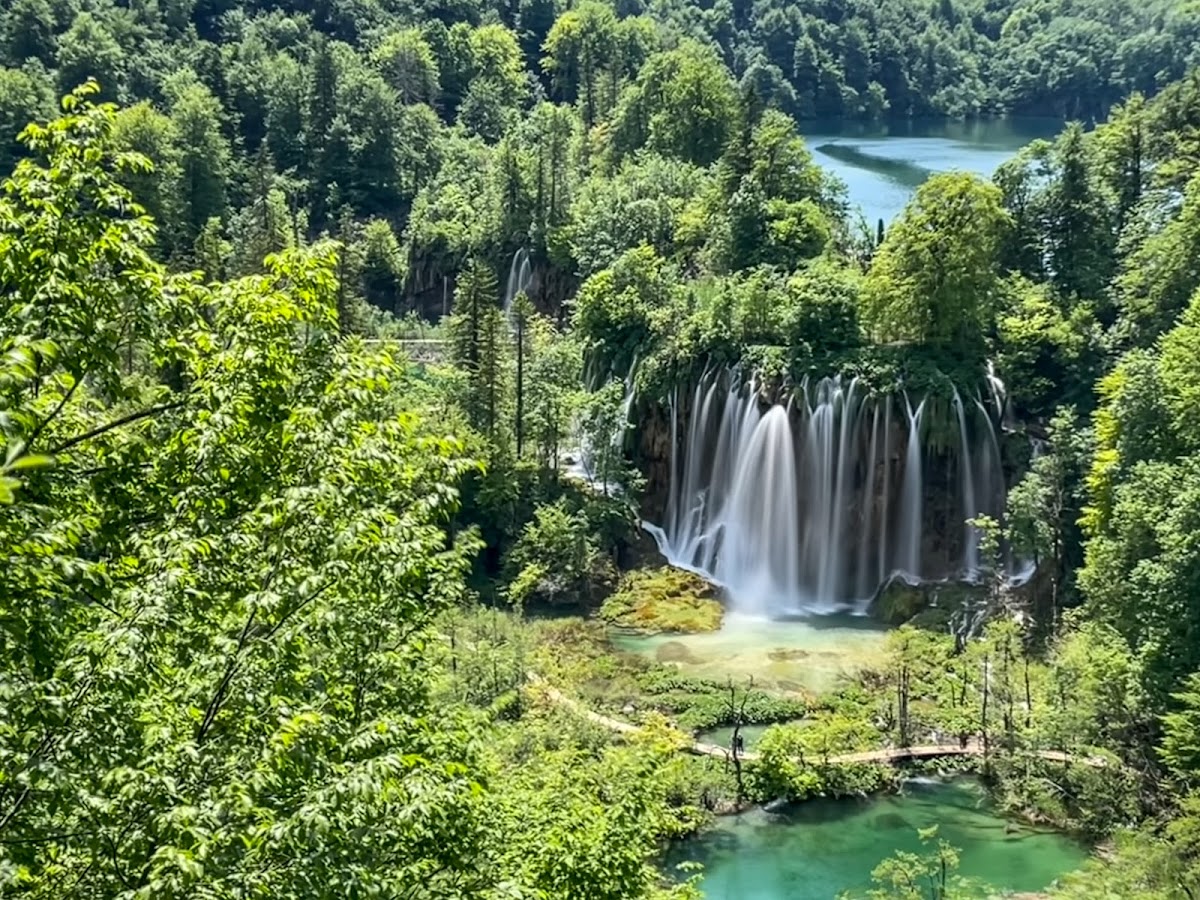
The Upper Lakes are accessed from Entrance 2 or by taking the electric boat across Lake Kozjak from the Lower Lakes. The boardwalks here wind through reed beds and marshy shallows before climbing alongside a staircase of waterfalls connecting the upper terraces. The most impressive is Veliki Prstavac, a 28-meter waterfall that you approach so closely the mist soaks your camera lens.
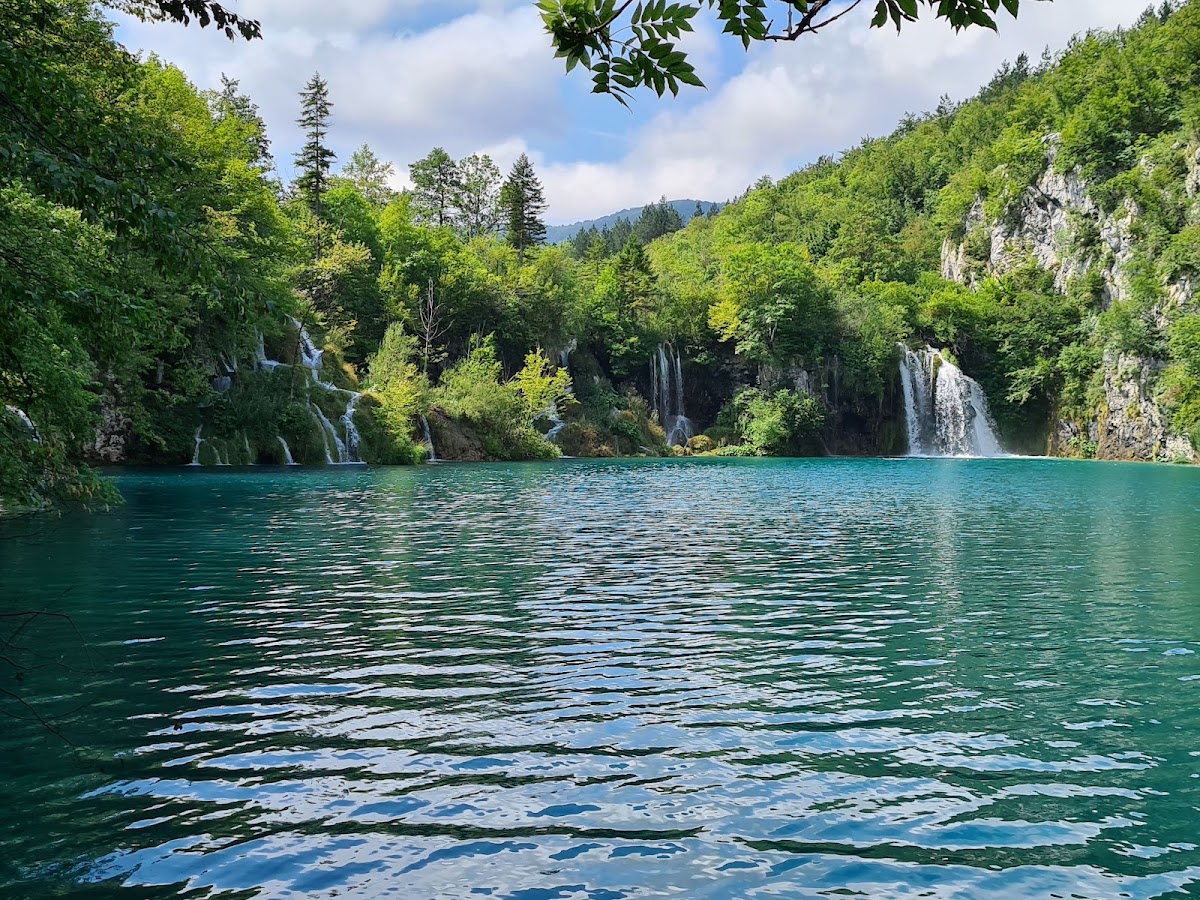
The lakes themselves — Gradinsko, Galovac, Oko, and Proscansko among others — display every shade of blue and green imaginable, shifting with depth, mineral content, and sunlight angle. Proscansko Jezero, the highest and largest of the upper lakes, sits at 636 meters elevation and reaches depths of 37 meters, its dark teal water contrasting with the lighter turquoise of the shallower lakes below.
The Upper Lakes boardwalk loop is approximately 4 km and takes 2 to 3 hours to complete, depending on how many stops you make. The terrain is more varied than the Lower Lakes — you'll encounter gentle inclines, forest paths, and wooden stairways alongside the boardwalks.
Practical Info
- Duration: 2–3 hours
- Difficulty: Easy to moderate — some elevation gain and uneven sections
- Cost: Included with park admission
- Starting point: Entrance 2 (or via boat from Lower Lakes)
- Season: Open April through October (closed November–March due to ice and snow)
Best Time to Do It
Late afternoon is magical here. As the sun drops behind the western tree line, the upper lakes take on an extraordinary emerald glow. In June and July, the Upper Lakes are at peak accessibility with extended hours (open until 7:00 or 8:00 PM). Visit in September for fewer crowds and early autumn colors beginning to appear on the beech trees — the reflections on Galovac Lake during this period are world-class.
Photography Tips
- The Upper Lakes are ideal for reflection photography — arrive early morning or late afternoon when winds are calm and the lake surfaces become mirrors
- Bring a wide-angle lens (16–35mm) for the expansive lake views and use foreground elements like fallen logs or moss-covered rocks
- Veliki Prstavac waterfall is best shot from the observation platform approximately 20 meters away — use a 70–200mm lens to isolate the cascade against the dark forest behind it
- The boardwalks through the marshes create fantastic leading lines in landscape compositions
Insider Tips
Start at Entrance 2 and walk the Upper Lakes first thing in the morning, then take the boat to the Lower Lakes after lunch. Most guided tours do the reverse, so you'll be walking against the flow and enjoying quieter trails. Bring waterproof shoes — after rain, sections of the forest trail between the upper lake terraces can be muddy. The area around Galovac Lake has several off-boardwalk viewpoints that are clearly marked — don't skip them, as they offer the most panoramic perspectives.
3. Ride the Electric Boat Across Lake Kozjak
This is the moment that elevates a Plitvice visit from great to unforgettable. The silent electric boat gliding across Lake Kozjak — the park's largest and deepest lake — feels like crossing into another world. No engine noise. No fuel smell. Just the quiet hum of an electric motor and the sound of water lapping against the hull.
What to Expect
Lake Kozjak separates the Upper and Lower Lakes and stretches 2.3 km long with a maximum depth of 46 meters. The electric boats have been operating since 1977, making Plitvice one of the earliest adopters of eco-friendly transport in a national park anywhere in the world. The boats carry up to 100 seated passengers (plus 50 standing) and run on a triangular route between three piers: P1 near the Lower Lakes, P2 near the Upper Lakes, and P3 at the midpoint on the eastern shore.
The longer crossing from P3 to P1 (or reverse) takes approximately 20 minutes, during which you'll drift past sheer limestone cliffs draped in moss, hidden coves where trout congregate in impossibly clear water, and forest that tumbles right down to the waterline. The water itself shifts from pale turquoise in the shallows to deep teal in the center, and on calm days the reflection of the surrounding hills creates a perfect mirror image.
Practical Info
- Duration: 15–20 minutes per crossing
- Difficulty: None — sit and enjoy
- Cost: Included with park admission (no separate ticket needed)
- Frequency: Boats run continuously, departing every 15–30 minutes depending on season and demand
- Capacity: 100 seated, 50 standing per boat
- Operating hours: Same as park opening hours; reduced service in winter (weather dependent)
Best Time to Do It
The last boat of the day — typically 30 to 60 minutes before park closing — offers the best experience. Crowds have thinned dramatically, the low sun creates spectacular golden light on the water, and there's often space to sit at the bow for an unobstructed view. In peak summer, the midday boats are standing-room-only with wait times of 30+ minutes. Avoid the 11:00 AM to 2:00 PM rush if possible.
Photography Tips
- Sit on the left side of the boat (facing forward on the P3 to P1 route) for the best cliff and forest views
- Shoot at a fast shutter speed (1/500s or faster) to compensate for boat movement — vibration-reduction is your friend here
- The reflection shots are best captured with a longer focal length (50–85mm) to compress the cliffs and their mirror image
- Use the crossing as a scouting opportunity — identify shoreline features you want to photograph later from the boardwalks
Insider Tips
If you're visiting in shoulder season (April–May or September–October), the P2 to P1 crossing sometimes makes an unscheduled stop near the small island in the center of Kozjak. Ask the boat operator — they're usually happy to slow down for a few minutes if the boat isn't packed. The shortest crossing (P1 to P2) takes only 10 minutes but misses the most scenic section of the lake. Always take the longer route via P3 if your route allows it.
4. Photograph Veliki Slap (The Great Waterfall)
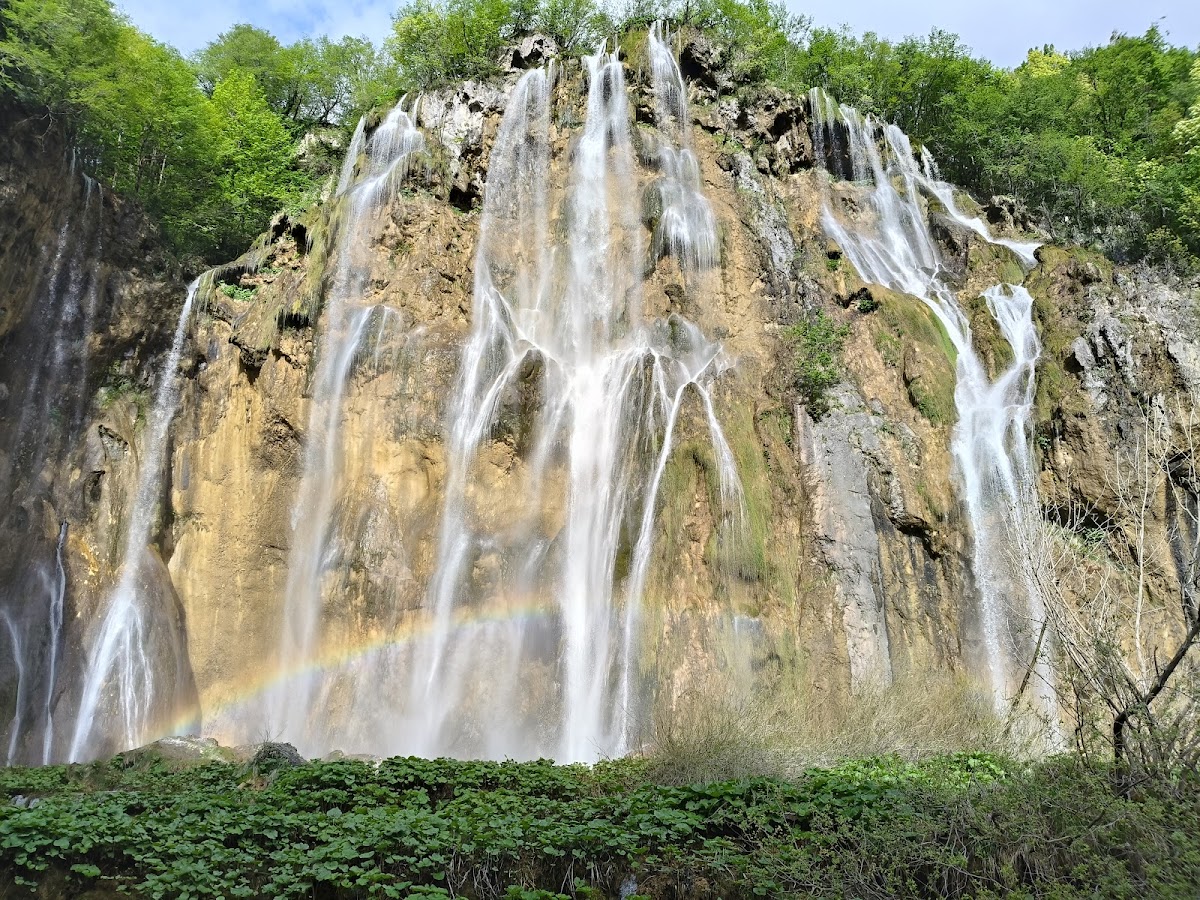
At 78 meters, Veliki Slap isn't just the tallest waterfall in Plitvice — it's the tallest in all of Croatia. The Plitvica River plunges off a limestone cliff into a churning pool at the very bottom of the Lower Lakes canyon, creating a sight that has defined Croatia's visual identity for decades. This is the waterfall that appears on postcards, guidebook covers, and half the Instagram posts tagged with #Plitvice.
What to Expect
Approaching from the Lower Lakes boardwalk, you hear Veliki Slap before you see it — a deep, resonant roar that builds as you round the final bend. The waterfall appears framed by canyon walls on either side, its white curtain of water contrasting against dark, moss-covered rock. In spring, when snowmelt swells the Plitvica River, the volume is staggering — sheets of spray drift across the viewing area, coating everything in fine mist.
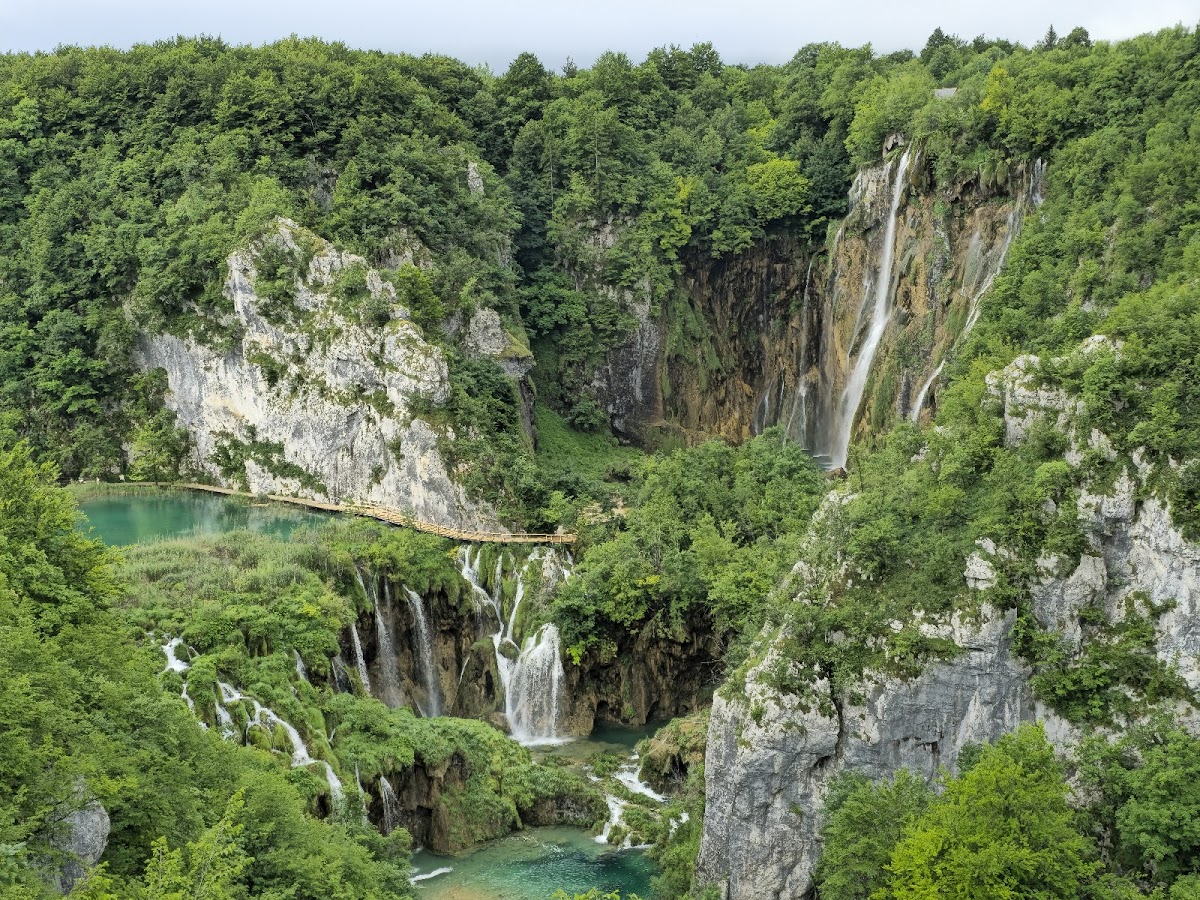
There are three main viewpoints. The first and most popular is the observation platform at the base of the falls, reached by a short promenade branching off the main boardwalk. Here you're close enough to feel the spray on your face and the bass rumble in your chest. The second viewpoint is the "postcard view" from the descent path near Entrance 1 — this is the elevated, wide-angle perspective you see in professional photos, with the waterfall set against the full canyon backdrop. The third — and least known — is a hidden viewpoint accessed by a small stepped path up the hill to the left, just before the waterfall. Walk up the steep path, turn right on the road, continue 200 meters, and find the trail on the right leading to an extraordinary panoramic overlook of both the waterfall and the lake chain below.
Practical Info
- Duration: 30–60 minutes (for all three viewpoints)
- Difficulty: Easy (base viewpoint) to moderate (hidden viewpoint involves steep, uneven stairs)
- Cost: Included with park admission
- Access: From Entrance 1, Veliki Slap is a 10–15 minute walk
- Water flow peak: March through May (spring snowmelt)
Best Time to Do It
The waterfall faces roughly south, so it catches direct sunlight from late morning onward. For photography, arrive before 9:00 AM when the falls are in soft, even shade — this eliminates the harsh contrast between sunlit spray and shadowed rock that makes midday shots so challenging. Overcast days are your best friend here. In winter, Veliki Slap partially freezes, creating extraordinary ice formations — but only after sustained periods below -10°C.
Photography Tips
- Bring a neutral density filter (ND8 or ND64) for long exposures during daytime — 2 to 8 seconds will transform the water into a silky veil while keeping the surrounding rock tack-sharp
- From the base viewpoint, shoot with a wide-angle lens (14–24mm) in portrait orientation to capture the full height of the falls
- The mist is relentless — carry a microfiber cloth and wipe your front element between every shot
- For the "postcard view," a 35–50mm focal length frames the waterfall with just enough canyon context
- Consider a rain cover for your camera; the spray zone extends 15–20 meters from the base in high-flow months
Insider Tips
The sound of Veliki Slap is as powerful as the sight. If you're shooting video, let the natural audio run — it's far more impressive than any stock waterfall sound. In the early morning before crowds arrive, you can sometimes access a rocky area to the right of the base pool for a unique low-angle perspective — look for the unmarked footpath before the official viewing platform. This waterfall is the reason to enter from Entrance 1 rather than Entrance 2 if you only have a few hours.
5. Take the Panoramic Train
Calling it a "train" is a bit generous — it's actually an open-sided road vehicle towing passenger carriages, more reminiscent of a safari vehicle than a locomotive. But the 6.5 km route it travels through the upper section of the park is genuinely one of the best ways to experience Plitvice's landscape without walking the entire distance, and it offers access to viewpoints you simply cannot reach on foot.
What to Expect
The panoramic train has been operating since 1977, running between three stops: Rapajinka (near Entrance 1), Velika Poljana (central hub near Entrance 2), and Labudovac (above the Upper Lakes). The ride takes approximately 30 minutes one way and passes through open meadows, dense forest corridors, and along ridge lines with sweeping views across the lake valley below.
The carriages are open-sided with bench seating, which means unobstructed views in every direction — and fresh air regardless of the weather. Each unit carries up to 100 seated passengers plus standing room for 50 more. The route isn't just transport; it's a scenic experience in its own right, passing through habitats where deer are frequently spotted at dawn and dusk, and where the forest canopy opens occasionally to reveal distant lake panoramas.
The train stops at strategically positioned viewpoints, including one overlooking the entire Upper Lakes chain — a perspective impossible to achieve from the boardwalks below. During the brief pause, you can step off, photograph the vista, and reboard.
Practical Info
- Duration: 25–30 minutes one way
- Difficulty: None — sit and ride
- Cost: Included with park admission
- Frequency: Every 20–30 minutes in peak season; hourly in off-season
- Route: Rapajinka → Velika Poljana → Labudovac (and reverse)
- Operating hours: Aligned with park hours; reduced winter schedule
Best Time to Do It
The first train of the morning and the last train of the evening are both outstanding. The early train gets you to the Upper Lakes trailhead before anyone who walked from Entrance 2, giving you a significant head start. The evening train offers spectacular golden-hour light filtering through the beech forest. In autumn (late September through October), the train route passes through some of the park's most dramatic foliage — the beech trees flanking the route turn brilliant gold and amber.
Photography Tips
- Sit on the right side (facing forward, heading toward Labudovac) for the best lake views during the ride
- Shoot at a high shutter speed (1/1000s+) to freeze the landscape despite the movement — or lean into the motion blur for creative effect
- The viewpoint stop overlooking the Upper Lakes is a must-shoot — have your camera ready, as the stop is brief (2–5 minutes)
- A 24–70mm zoom is the most versatile lens for train photography, covering both wide landscapes and detailed forest shots
Insider Tips
The panoramic train is not just transport — it's crowd management strategy. Use it to skip the 2 km walk between Entrance 1 and the Upper Lakes area, saving your energy for the boardwalks and trails where walking is the experience. In peak season, the train queue at Velika Poljana can hit 30–45 minutes mid-afternoon. Avoid this by timing your train ride for before 10:00 AM or after 4:00 PM. If you're doing Route C (the most popular park circuit), incorporating the train into your loop saves approximately one hour.
6. Hike Route K (The Full Park Circuit)
Route K is Plitvice's ultimate challenge — the longest marked trail in the park, and the only route that takes you around the entire lake system, including remote forest sections that 95% of visitors never see. If you want to truly know Plitvice, not just see its greatest hits, this is the hike.
What to Expect
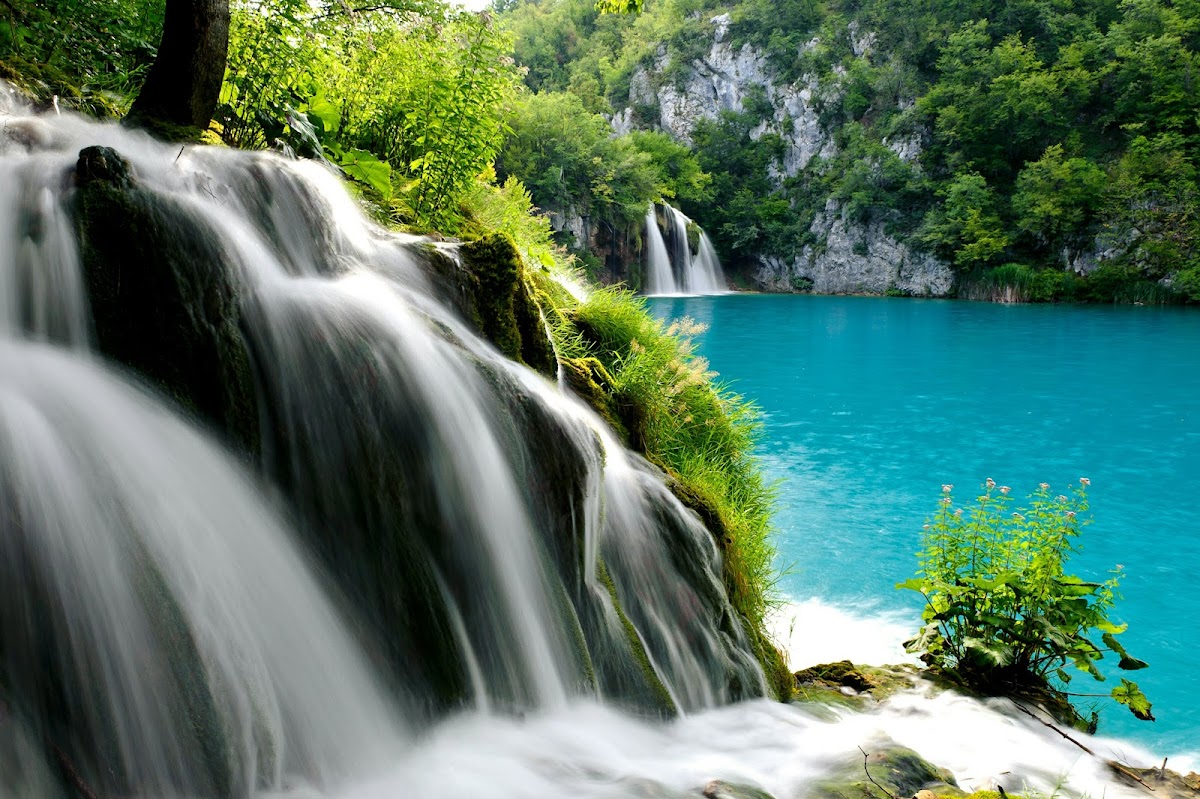
Route K covers approximately 18.3 to 22 km (depending on variant) and takes 6 to 8 hours to complete. It begins at Entrance 1, descends through the Lower Lakes canyon, passes Veliki Slap, and continues through the entire Lower Lakes boardwalk — the same spectacular section every visitor experiences. But here's where Route K diverges from the standard routes: instead of taking the electric boat across Lake Kozjak (as Routes B and C do), Route K sends you around the lake on foot.
This forested circumnavigation of Lake Kozjak is the heart of Route K's appeal. The trail winds through ancient beech forest along the lake's shoreline, with occasional clearings offering views across the water to the cliffs and forest on the far side. Birdsong replaces the chatter of tourists. You might spot deer drinking at the waterline, or hear the drumming of a black woodpecker overhead. The trail surface alternates between well-maintained forest path and rocky sections requiring sturdy footwear.
After completing the Kozjak circumnavigation, Route K rejoins the Upper Lakes boardwalk system, taking you through all twelve upper lakes before using the panoramic train for the return leg to Entrance 1. It's the only route that uses both the boat (a short P2 to P1 crossing) and the train, while incorporating sections of trail that aren't part of any other marked route.
Practical Info
- Duration: 6–8 hours
- Distance: 18.3–22 km
- Difficulty: Difficult — significant distance, varied terrain, and elevation changes
- Cost: Included with park admission
- Starting point: Entrance 1
- What to bring: 2+ liters of water, packed lunch, rain jacket, sturdy hiking boots, sunscreen
- Season: Best from May through October (some sections may be closed in winter)
Best Time to Do It
Start at park opening — 7:00 AM in summer — to ensure you have enough daylight for the full circuit. The best months are May, June, and September, when daylight is long (14+ hours), temperatures are comfortable for sustained hiking, and the forest sections are at their most beautiful. Avoid July and August if possible — not for the crowd-free forest sections, but for the shared boardwalk sections where heat and crowding reduce enjoyment. October is spectacular for foliage but offers shorter daylight hours, so keep a steady pace.
Photography Tips
- Route K's exclusive forest sections offer the best atmospheric photography in the park — especially in morning mist when the beech canopy filters golden light onto the forest floor
- Bring a versatile zoom (24–105mm or 24–70mm) rather than multiple primes — you'll want to travel light over 20+ km
- The western shore of Lake Kozjak (the Route K-exclusive section) provides unique perspectives of the lake that are completely absent from the standard tourist photos
- If you're there in autumn, the reflections along the Kozjak forest trail are some of the most photogenic scenes in all of Croatia
Insider Tips
Carry more water than you think you need — there are no water refill points along the forest section of Route K. Pack a real lunch, not just snacks; you're committing 6–8 hours. Tell someone at your accommodation what route you're hiking and your expected return time. Cell service is patchy in the forest sections. The Route K forest trail is occasionally muddy after rain — gaiters or waterproof boots make a significant difference to comfort. This is the route for hikers, not sightseers — if you're not comfortable walking 20 km in a day with a pack, choose Route C instead (it covers the scenic highlights in 4–6 hours).
7. Visit in Winter for Frozen Waterfalls
This is the secret that changes everything about Plitvice. Most visitors come in summer and fight the crowds. The few who come in winter discover an entirely different — and many argue more beautiful — national park. When temperatures plunge below -10°C for sustained periods, Plitvice's waterfalls freeze into extraordinary ice sculptures, the lakes develop crystal-clear ice edges, and the boardwalks wind through a silent, snow-draped forest that feels like a scene from Narnia.
What to Expect
Winter at Plitvice (December through February) transforms the park completely. Veliki Slap freezes into a towering column of blue-white ice. The smaller cascades between the Lower Lakes become intricate ice formations — translucent curtains, frozen spray fans, and icicle clusters that catch whatever low winter light penetrates the canyon. Snow blankets the forests and boardwalks, and the lakes themselves develop a thin ice shelf along their edges while remaining unfrozen in the deep center, creating a stunning contrast between ice and vivid turquoise water.
The experience is profoundly quiet. Where summer brings 12,000 visitors per day, winter might see 50 to 200. You'll walk sections of boardwalk entirely alone, the only sound being the crunch of snow underfoot and the muffled rush of water still flowing beneath ice formations. It's meditative, otherworldly, and deeply photogenic.
However, winter visits come with significant limitations. The Upper Lakes are closed from early November through mid-March due to ice and safety concerns. Only the Lower Lakes canyon path, the electric boat (weather permitting), and the panoramic train remain operational, and hours are reduced (typically 9:00 AM to 4:00 PM). Snow and ice on the boardwalks create genuinely slippery conditions — proper winter footwear with grip is essential, not optional.
Practical Info
- Duration: 2–4 hours (Lower Lakes only)
- Difficulty: Moderate — flat boardwalks but icy and slippery conditions
- Cost: €10 adult (Season A — lowest price of the year)
- Open areas: Lower Lakes, Veliki Slap, electric boat (weather dependent), panoramic train
- Closed areas: Upper Lakes, some forest trails
- Park hours: Typically 9:00 AM – 4:00 PM
- Access: Rental car with winter tires required; roads can be icy
Best Time to Do It
January and February offer the highest probability of frozen waterfalls. The magic requires sustained temperatures below -10°C for at least a week — check weather forecasts before traveling. Weekdays are emptier than weekends. Morning visits offer the softest light in the canyon, while the low winter sun creates dramatic side-lighting on ice formations from about 1:00 to 3:00 PM.
Photography Tips
- Winter Plitvice is a photographer's paradise — the contrast between white ice, turquoise water, and dark forest creates compositions that practically shoot themselves
- Bring extra batteries — cold drains lithium-ion batteries rapidly. Keep spares warm in an inner jacket pocket
- A polarizing filter is even more important in winter to manage reflections off ice and snow
- Shoot ice formations in detail as well as wide — macro and close-up shots of frozen cascades reveal incredible crystalline structures
- White balance matters: shoot in RAW, but set your camera to "shade" or "cloudy" to prevent the snow from rendering as cold blue
- Tripod is essential — winter light is low, and you'll want longer exposures for the partially frozen waterfalls
Insider Tips
Wear traction devices (microspikes or yaktrax) over your boots — the boardwalks are wooden and become ice rinks. The park doesn't always salt or sand them. Bring hand warmers for both your hands and your camera. The viewpoint above Veliki Slap (the secret overlook mentioned earlier) is even more spectacular in winter, with the frozen waterfall framed by snow-covered trees. Budget accommodation near the park drops to 30–40% of summer prices in winter — you can stay in properties that cost €150/night in August for €45–60 in January.
8. Join a Photography Workshop
Plitvice Lakes is one of Europe's most photographed natural landscapes, and several professional photography operators offer dedicated multi-day workshops that combine expert instruction with exclusive access strategies — getting you to the best locations at the best times, with the technical guidance to capture them properly.
What to Expect
Photography workshops at Plitvice typically run 2 to 5 days and are led by professional landscape photographers who know the park intimately. A typical day starts before sunrise with a drive to the park entrance for first-light shooting, followed by several hours of guided shooting along the boardwalks and forest trails. Midday — when the light is harsh — is reserved for classroom-style instruction covering post-processing, composition theory, and equipment optimization. The day ends with a return to the park for golden-hour and sunset sessions.
Workshop leaders like Luka Esenko (one of Croatia's most respected landscape photographers) and operators such as Backcountry Journeys and Photo Tours Worldwide offer programs specifically designed around Plitvice's unique challenges: shooting in low canyon light, managing spray and mist, mastering long exposures on moving boardwalks, and working with the extreme dynamic range between bright water and shadowed rock.
Group sizes are typically small (6–12 participants), ensuring personal attention and minimal impact on the boardwalks. Some workshops include sessions at nearby locations like Rastoke waterfalls and Mreznica Canyon, providing variety in subject matter and photographic challenges.
Practical Info
- Duration: 2–5 days (varies by operator)
- Difficulty: Easy to moderate (walking boardwalks and trails, carrying camera equipment)
- Cost: €800–€2,500 per person, depending on duration and operator (typically excludes accommodation and park admission)
- Group size: 6–12 participants
- Skill level: Most workshops accommodate intermediate to advanced photographers, though some offer beginner-friendly options
- Booking: Reserve 3–6 months in advance for peak autumn dates
Best Time to Do It
Autumn (mid-October to early November) is the premier workshop season. The forests blaze with gold, amber, and crimson, the sun angle is low and warm, crowds have thinned significantly from summer, and overcast days (ideal for waterfall photography) are frequent. Fewer tourists means fewer people on the boardwalks, giving you clean compositions without heads and shoulders in every frame. Spring workshops (late April to May) offer peak waterfall flow and wildflowers as an alternative.
Photography Tips
- Even if you're an experienced photographer, a workshop teaches you location-specific knowledge you can't get from YouTube — exactly where to stand at Veliki Prstavac for the rainbow that appears at 8:30 AM in October, or which section of boardwalk aligns with sunrise reflections on Gavanovac Lake
- Bring your primary camera body plus a backup — humidity and spray are relentless in the canyon
- Most workshop leaders recommend a 16–35mm wide-angle and a 70–200mm telephoto as the essential two-lens kit for Plitvice
- Invest in quality ND filters (6-stop and 10-stop) before the workshop — they'll be used constantly
Insider Tips
Ask your workshop leader about early entry. Some operators have relationships with park management that allow pre-opening access — even 30 minutes before the general public makes an enormous difference for clean, crowd-free shots. The best workshop investment isn't the instruction on camera settings (you can learn that online) — it's the local knowledge of micro-conditions: which waterfalls catch the first light, where morning mist lingers longest, which trails offer the most dramatic autumn color. That knowledge takes years of repeated visits to develop.
9. Kayak Mreznica Canyon (Nearby Adventure)
If Plitvice Lakes is nature at its most pristine, Mreznica Canyon is nature at its most playful. Just 30 minutes from the national park, this hidden river gorge offers the kind of active water adventure that Plitvice's strict conservation rules don't permit — swimming, cliff jumping, paddling through waterfalls, and exploring a landscape that feels like a secret only locals know about.
What to Expect
The Mreznica River carves through a deep limestone canyon in the countryside between Rastoke Village and Plitvice Lakes. The canyon is a protected Natural Monument, accessible almost exclusively by kayak — there are no roads or trails along most of its length. Paddling through it feels like entering a hidden world: vertical cliffs rise on both sides, draped in hanging moss and ferns, while the river flows crystal-clear over travertine formations, creating a series of cascading waterfalls, rapids, and deep swimming pools.
The standard kayaking tour covers approximately 6 km of river, passing through nine waterfalls (ranging from gentle cascades to an 8-meter drop), navigating easy Class I–II rapids, and stopping at natural swimming pools where the water is so clean you can drink from it. The highlight for many paddlers is the optional cliff jumping — ranging from 1 to 8 meters high — into deep, clear pools at the base of waterfalls. You can even paddle behind some of the waterfalls, entering hidden grottoes where the roar of water overhead is exhilarating.
No kayaking experience is required. Professional guides provide comprehensive safety briefings, all equipment, and constant supervision throughout the trip. Children as young as 6 can participate (in tandem kayaks with adults).
Practical Info
- Duration: 3.5–4 hours total (including preparation, briefing, and 2.5–3 hours on the water)
- Difficulty: Easy to moderate — suitable for complete beginners
- Cost: €25–€55 per person depending on operator and season
- What's included: Kayak, paddle, helmet, life jacket, neoprene suit, waterproof bag, professional guide
- Meeting point: Primislje village (operators provide exact coordinates)
- Season: May through October (best June–September for water temperature)
- Start times: Usually 10:00 AM and 3:00 PM
- Minimum age: 6 years old
- Distance from Plitvice: 30 minutes by car
Best Time to Do It
Late morning starts (10:00 AM) in June through August are ideal — the water temperature is comfortable, the canyon catches dramatic overhead light, and you'll be glad for the swimming stops in the heat. The afternoon session (3:00 PM) offers slightly cooler paddling and a different light character, with the western canyon walls in shadow while the eastern side glows golden. Avoid weekends in July and August when the canyon sees its highest traffic; weekday trips feel significantly more secluded.
Photography Tips
- Waterproof action cameras (GoPro or similar) are the practical choice here — your DSLR will not survive the spray and potential capsizes
- The moment when you paddle through the 8-meter waterfall curtain is the shot everyone remembers — mount your camera on a chest or helmet mount for a first-person perspective
- The crystal-clear water reveals the travertine riverbed in incredible detail — shoot downward from the kayak for unique underwater-without-diving compositions
- Canyon light is dramatic and fleeting — when a shaft of sun penetrates the gorge and illuminates a waterfall, be ready
Insider Tips
Book with local operators like Plitvice Outdoor or Raftrek for the most authentic experience — they know the river intimately and often take slightly different routes depending on water levels. Wear swimwear under your wetsuit and bring a dry change of clothes for the car. You will get soaked. This is the perfect complement to a Plitvice park visit — Plitvice is look-but-don't-touch; Mreznica is jump right in. Schedule it for your second day to give your legs a break from boardwalk walking.
10. Explore Rastoke Waterfalls Village (Nearby Day Trip)
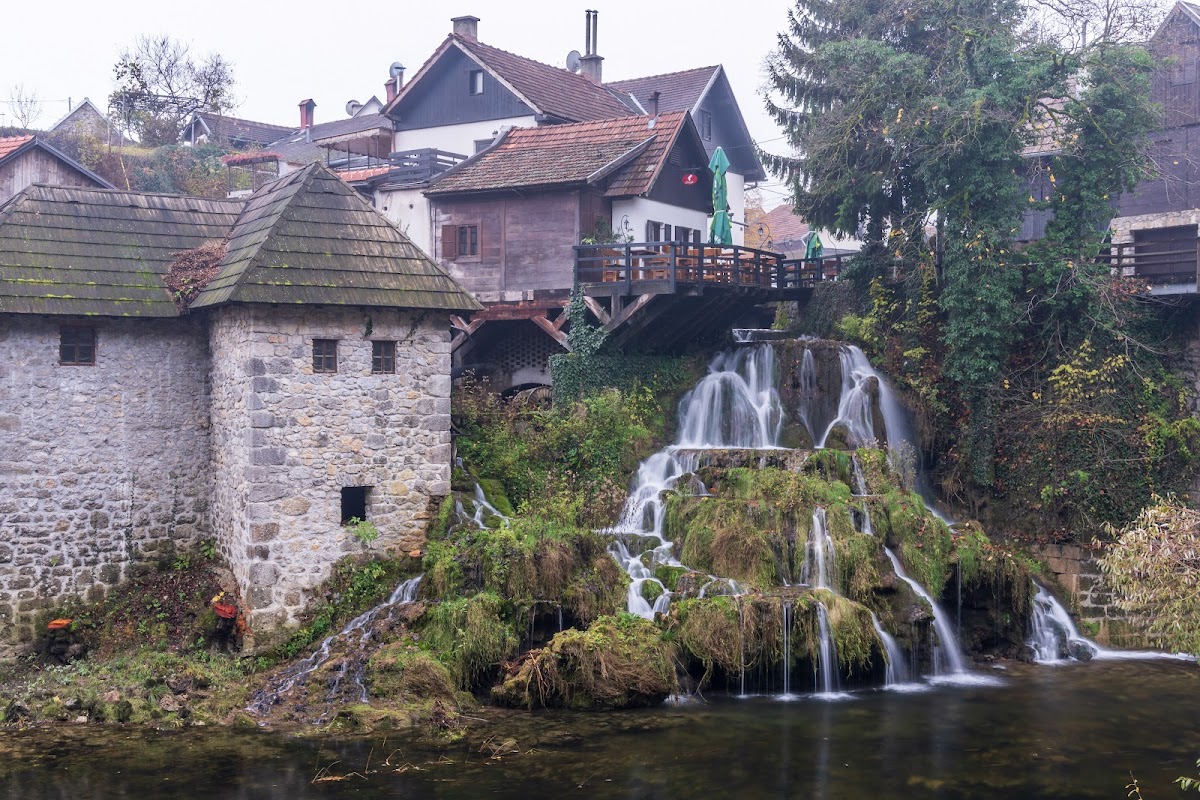
Imagine a village built inside a waterfall system. That's Rastoke — a cluster of centuries-old stone houses and wooden watermills sitting directly on top of, beside, and between 23 cascading waterfalls where the Slunjcica River tumbles into the Korana River. It's 30 km from Plitvice, takes 2–3 hours to explore, and feels like stepping into a Croatian fairytale that hasn't changed in 300 years.
What to Expect
Rastoke sits at the edge of the town of Slunj, where the Slunjcica River drops over a series of travertine barriers — the same geological process that created Plitvice Lakes, but here it happened around a human settlement. The result is extraordinary: stone cottages with waterfalls cascading through their gardens, wooden watermills with wheels still turning in the current, footbridges crossing rushing channels, and everywhere the sound of falling water.
The village has been protected as a cultural heritage site since 1969, and its collection of 23 waterfalls — including Hrvoje, Vilina Kosa (Fairy's Hair), and Buk — creates a living landscape unlike anywhere else in Croatia. Walking through Rastoke, you'll cross small bridges over channels where water rushes between buildings, pass centuries-old mills where grain was ground using the river's power, and find hidden viewpoints where waterfalls crash into deep green pools.
Several walking routes (ranging from 30 minutes to 2 hours) wind through the village and along the rivers. The Fairy Garden (Bajkoviti vrt) is a themed area blending Croatian folklore with the natural setting — whimsical sculptures, storybook scenes, and scenic pathways set among the waterfalls. The Jareb Mill, one of the last functioning watermills, offers tours where the Jareb family demonstrates traditional milling and sells freshly baked bread.
Practical Info
- Duration: 2–3 hours for a thorough visit
- Difficulty: Easy — paved paths and bridges with some uneven stone sections
- Cost: Free entry to the village; small fees for specific attractions (mill tours, Fairy Garden approximately €3–5)
- Getting there: 30 km north of Plitvice (25–30 minutes by car); on the main Zagreb–Split highway route
- Parking: Available in Slunj town center, short walk to the village
- Food: Several traditional konobas (taverns) serve local trout, structure (cheese curds), and other Croatian specialties directly beside the waterfalls
Best Time to Do It
Spring (April–May) offers the most dramatic water flow, when snowmelt from the nearby mountains swells the Slunjcica to its fullest. Morning light (before 10:00 AM) is best for photography, as the village faces east and catches warm, direct light on the waterfalls and stone buildings. Visit on weekday mornings to have the footpaths largely to yourself. Summer evenings (June–August) offer a completely different experience — some of the konobas serve dinner on terraces directly above waterfalls, with the sound of rushing water as your soundtrack. Pair Rastoke with your Plitvice visit as a morning stop on the way to or from the national park.
Photography Tips
- Rastoke's charm is in the combination of human and natural architecture — frame waterfalls with mill wheels, stone walls, and flower boxes to create compositions you can't get at Plitvice
- A 35mm or 50mm lens captures the intimate village-and-waterfall scenes perfectly, while wide-angle works for the larger cascade overlooks
- The bridges make excellent foreground elements — shoot through bridge railings for natural framing
- Early morning offers the best chance for mist rising off the waterfalls with warm side-lighting on the stone buildings
- For the Vilina Kosa (Fairy's Hair) waterfall, use a slow shutter speed (1–2 seconds) to emphasize the delicate, hair-like water strands that give it its name
Insider Tips
Have lunch at one of the konoba restaurants built over the water — the trout is locally caught and simply grilled, and the setting is unlike any restaurant you've experienced. Try the smoked trout from S'mek delicatessen, a local favorite. Rastoke is where locals go when they want the Plitvice experience without the Plitvice crowds and cost — it's a genuine working village, not a tourist attraction, and the welcome reflects that. If you're driving between Zagreb and Plitvice, Rastoke is directly on the route and makes the perfect lunch stop to break up the 2.5-hour drive.
Planning Your Plitvice Lakes Day: Practical Tips
How to Plan Your Day
Half-day visit (3–4 hours): Enter at Entrance 1, walk the Lower Lakes canyon, photograph Veliki Slap, take the boat across Kozjak, and catch the panoramic train back. This covers the park's greatest hits efficiently. Choose Route A or B from the official park map.
Full-day visit (6–8 hours): Do everything above plus explore the Upper Lakes boardwalks. Route C is the most popular full-day circuit, covering both lake systems with boat and train rides. For the adventurous, Route K adds the forest circumnavigation of Lake Kozjak.
Two-day visit (recommended): Day 1 — Plitvice park (full-day Route C or K). Day 2 — Morning at Rastoke village, afternoon kayaking Mreznica Canyon. This combination gives you the full spectrum of experiences without rushing.
Ticket Information & Routes
Plitvice uses seasonal pricing across three tiers:
- Season A (January–March, November–December): €10 adult, €5 child (7–18), free under 7
- Season B (April–May, October): €23 adult, €10 child
- Season C (June–September): €40 adult, €15 child
All tickets include electric boat rides, panoramic train, and access to all open trails. Buy tickets online at least one day in advance — the park now prioritizes online bookings and may limit walk-up entries during peak season. Two-day tickets offer a discount and allow consecutive-day access.
Eight marked routes (A, B, C, E, F, H, K, and S) offer circuits of varying length, all starting from either Entrance 1 or Entrance 2. Route maps are available at both entrance buildings and on the official park website.
What to Bring
- Footwear: Waterproof hiking shoes or boots with good grip. The boardwalks are wooden and get slippery when wet. No sandals or flip-flops.
- Water: At least 1.5 liters per person. Refill options inside the park are limited.
- Rain jacket: Weather changes quickly in the Dinaric Alps region. A packable waterproof layer is essential.
- Camera protection: Lens cloth, rain cover, and a waterproof bag. Spray from waterfalls is unavoidable.
- Sun protection: Sunscreen, hat, and sunglasses — the Upper Lakes area has significant exposed sections.
- Snacks/lunch: If you're doing a full day, pack food. The park has one restaurant and a few snack kiosks, but queues are long and options limited.
- Cash: Some vendors inside the park only accept cash (though entrances take cards).
How Much Time Do You Need?
- Minimum meaningful visit: 3 hours (Lower Lakes + Veliki Slap + boat)
- Comfortable full experience: 5–6 hours (Route C — both lake systems)
- Complete immersion: 7–8 hours (Route K — full circuit including forest trails)
- Multi-day with nearby activities: 2 days (park + Rastoke + Mreznica kayaking)
Frequently Asked Questions About Plitvice Lakes Activities
What are the best things to do at Plitvice Lakes for first-time visitors?
For first-time visitors, the three must-do activities are walking the Lower Lakes canyon boardwalk, photographing Veliki Slap (the Great Waterfall), and riding the electric boat across Lake Kozjak. Together, these experiences capture the essence of what makes Plitvice extraordinary — the vivid turquoise water, the dramatic waterfalls, and the serene lake crossings. Follow Route B or C from Entrance 1, which combines all three into a 4–6 hour circuit. Arrive before 9:00 AM to experience the canyon without heavy crowds.
Can you swim in Plitvice Lakes?
No. Swimming, wading, and any water contact is strictly prohibited in Plitvice Lakes National Park. The travertine barriers that form the lakes are living geological formations, and human contact damages them. Fines for entering the water can reach €150. If you want to swim in crystal-clear Croatian waters, head to Mreznica Canyon (30 minutes from Plitvice), where kayaking tours include swimming stops in pristine natural pools — the water is equally clear and arguably more fun.
How many days do you need at Plitvice Lakes?
One full day is sufficient to see the park's highlights using Route C (both Upper and Lower Lakes, boat ride, and panoramic train). However, two days is ideal for a comprehensive experience — spend day one in the park, then visit Rastoke waterfalls village and kayak Mreznica Canyon on day two. If you only have half a day (3–4 hours), you can still cover the Lower Lakes and Veliki Slap via Route A or B and leave with unforgettable memories.
What is Route K at Plitvice Lakes?
Route K is the longest marked trail in Plitvice Lakes National Park, covering 18–22 km over 6–8 hours. It's the only route that circumnavigates Lake Kozjak on foot (instead of taking the boat), passing through remote forest sections that other routes don't access. Route K is ideal for experienced hikers who want the complete Plitvice experience with minimal crowds on the exclusive forest sections. It requires sturdy boots, 2+ liters of water, packed lunch, and reasonable fitness.
Are Plitvice Lakes activities suitable for children?
Yes. The Lower Lakes boardwalk and electric boat ride are suitable for children of all ages, though strollers are difficult on the narrower boardwalk sections. The panoramic train is a hit with kids. For the Upper Lakes, children aged 6+ generally manage the walking distances well. Outside the park, Mreznica Canyon kayaking accepts children from age 6 (in tandem kayaks with adults), and Rastoke village is easy terrain for all ages. Carry children in a back carrier rather than a stroller for the most flexibility on the boardwalks.
What is the best time of year for Plitvice Lakes activities?
May and September offer the best overall conditions — pleasant temperatures (15–22°C), full waterfalls, moderate crowds, and mid-range ticket prices (€23). For photography, mid-October (autumn colors) and January (frozen waterfalls) are extraordinary. For the lowest prices and emptiest trails, visit January through March (€10 entry). For kayaking Mreznica Canyon, June through August provides the warmest water temperatures. Each season offers a genuinely different park experience.
How much do Plitvice Lakes activities cost?
Park admission covers the major activities: boardwalk access, electric boat rides, and panoramic train rides. Tickets range from €10 (winter) to €40 (summer) for adults. Outside the park, Mreznica Canyon kayaking costs €25–55 per person with all equipment included. Rastoke village is free to enter. Photography workshops range from €800–2,500 for multi-day programs. A two-day Plitvice experience (park entry + kayaking + meals) can be done for approximately €100–120 per person in shoulder season.
Is Plitvice Lakes wheelchair accessible?
Partially. The main pathways around Entrance 2, the panoramic train, and the electric boat are wheelchair accessible. Some sections of the Lower Lakes boardwalk are accessible, though the boardwalks are narrow (approximately 1.2m) and can be challenging when crowded. The Upper Lakes have more limited wheelchair access due to uneven terrain and stairs. The park recommends contacting them directly at least one week before your visit to arrange accessibility-specific routing. Rastoke village has limited accessibility due to uneven stone paths and bridges.
Can you visit Plitvice Lakes in winter?
Yes, and it's one of the park's best-kept secrets. The Lower Lakes remain open year-round, and in sustained cold (-10°C or below), the waterfalls freeze into spectacular ice formations. Winter tickets are just €10, and you might share the park with only a few dozen other visitors. The Upper Lakes close November through mid-March, and park hours are reduced (9:00 AM to 4:00 PM). You'll need winter tires on your car and proper cold-weather gear, including traction devices for icy boardwalks.
What activities are available near Plitvice Lakes outside the park?
The Plitvice region offers excellent activities beyond the national park itself. Mreznica Canyon kayaking (30 minutes away) provides swimming, cliff jumping, and paddling through waterfalls. Rastoke waterfalls village (30 km north) offers a free, charming alternative waterfall experience with traditional restaurants. Barac Caves (15 minutes away) features a 60-minute underground tour through illuminated stalactite formations. Other options include horseback riding through Plitvice valleys, cycling tours to Korana Canyon, quad/buggy adventures around Grabovac, and even tandem paragliding with aerial views over the lake system.