Plitvice Lakes vs Krka: Which Croatian National Park Should You Visit?
Croatia has two world-famous waterfall parks, and if you're planning a Croatian holiday, you've probably run into the same question every traveler faces: Plitvice Lakes or Krka — which one is worth your time?
The short answer is that both are extraordinary, and they're more different than most people realize. Plitvice Lakes National Park is a vast, UNESCO-listed wonderland of sixteen terraced lakes and over ninety waterfalls spread across nearly 300 square kilometers of ancient forest. Krka National Park is a more compact, coastal-accessible park centered on seven dramatic waterfalls along the Krka River, with a history of allowing visitors to swim in its waters.
Choosing between them isn't about "better" or "worse" — it's about what kind of experience you're after, how much time you have, and where you'll be based in Croatia. This guide compares every aspect that matters: size, cost, crowds, activities, accessibility, photography opportunities, and seasonal differences. We also cover what to do if you have enough time to visit both, including a ready-to-use two-to-three-day itinerary.
Whether you're a photographer chasing cascading turquoise water, a family looking for an easy day out, or a budget traveler counting every euro, this comparison will help you make the right call.
Quick Comparison Table
| Feature | Plitvice Lakes | Krka National Park |
|---|---|---|
| Size | 296.85 km² | 109 km² |
| Lakes/Waterfalls | 16 lakes, 90+ waterfalls | 7 major waterfalls along Krka River |
| UNESCO Status | World Heritage Site (since 1979) | Not UNESCO-listed |
| Swimming | Strictly prohibited | Allowed in designated areas (main waterfall swimming banned since 2021) |
| Peak Season Entry (Adult) | €40 (June–September) | €40 (June–September) |
| Off-Season Entry (Adult) | €10 (January–March, November–December) | €7 (January–March, November) |
| Shoulder Season Entry (Adult) | €23.50 (April–May, October) | €20 (April–May, October) |
| Nearest Major City | Zagreb (130 km / ~2 hrs) | Šibenik (16 km / ~20 min) |
| Distance from Split | 241 km / ~3 hrs | 85 km / ~1.5 hrs |
| Distance from Zadar | 132 km / ~1.5 hrs | 80 km / ~1 hr |
| Minimum Time Needed | 4–6 hours (full day recommended) | 2–4 hours |
| Annual Visitors | ~1.5 million | ~1.2 million |
| Best For | Immersive hiking, photography, scale | Swimming, day trips, coastal travelers |
| Boardwalks/Trails | Extensive boardwalk network, multiple routes (4–8 hrs) | One main trail (~45 min walk) plus boat excursions |
| Transport Within Park | Electric boats + panoramic train included | Boat rides to Visovac Island (extra fee) |
| Elevation Change | 133 meters between upper and lower lakes | Relatively flat along river |
What Plitvice Lakes and Krka Have in Common
Before diving into the differences, it's worth recognizing how much these two parks share — because those similarities are exactly why the comparison confuses so many travelers.
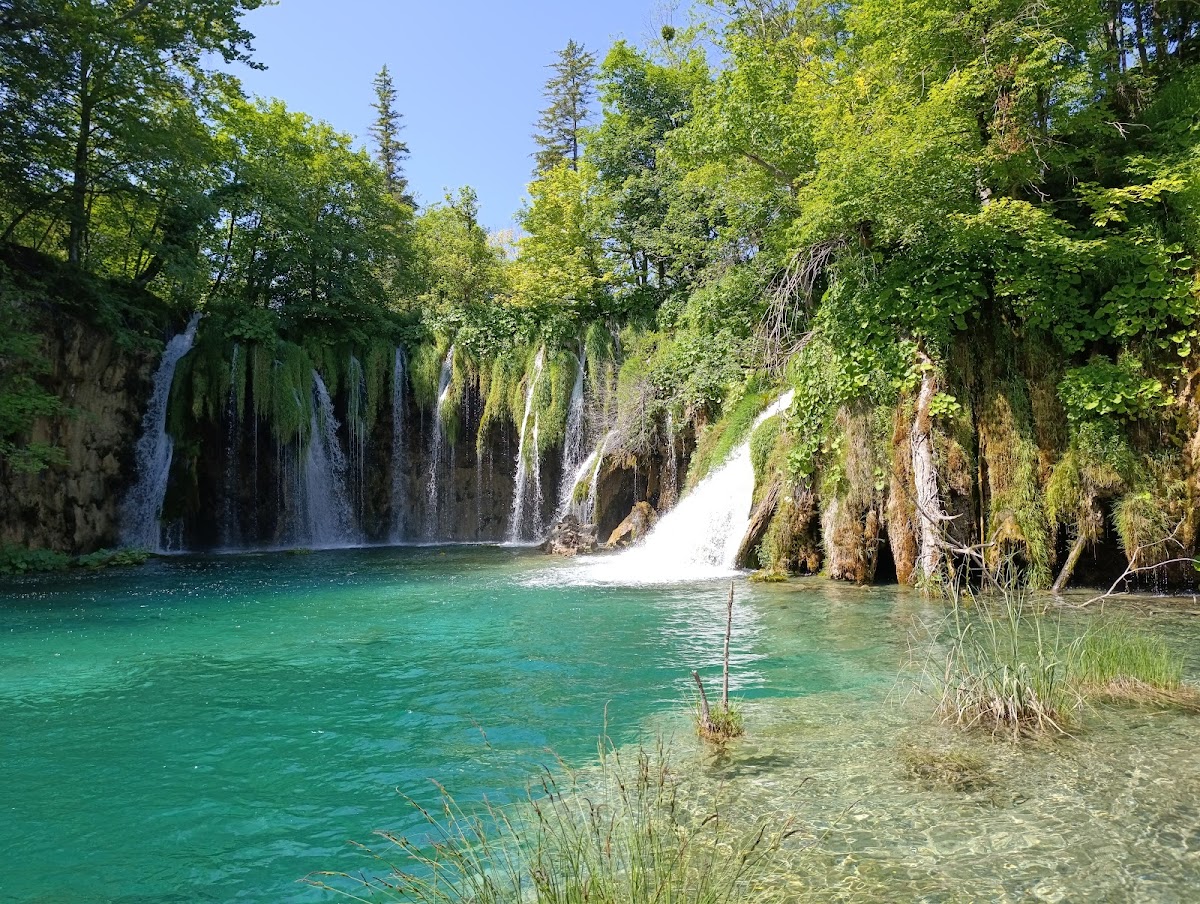
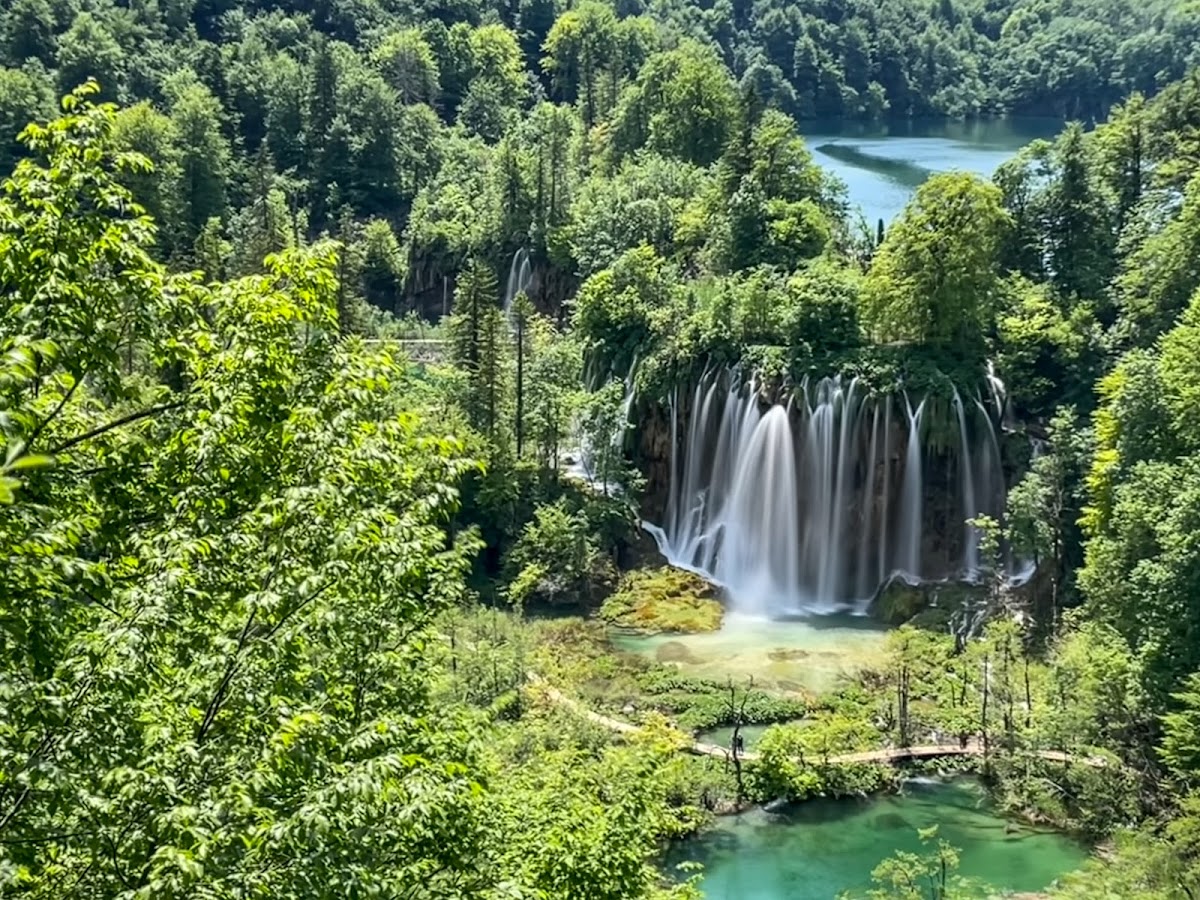
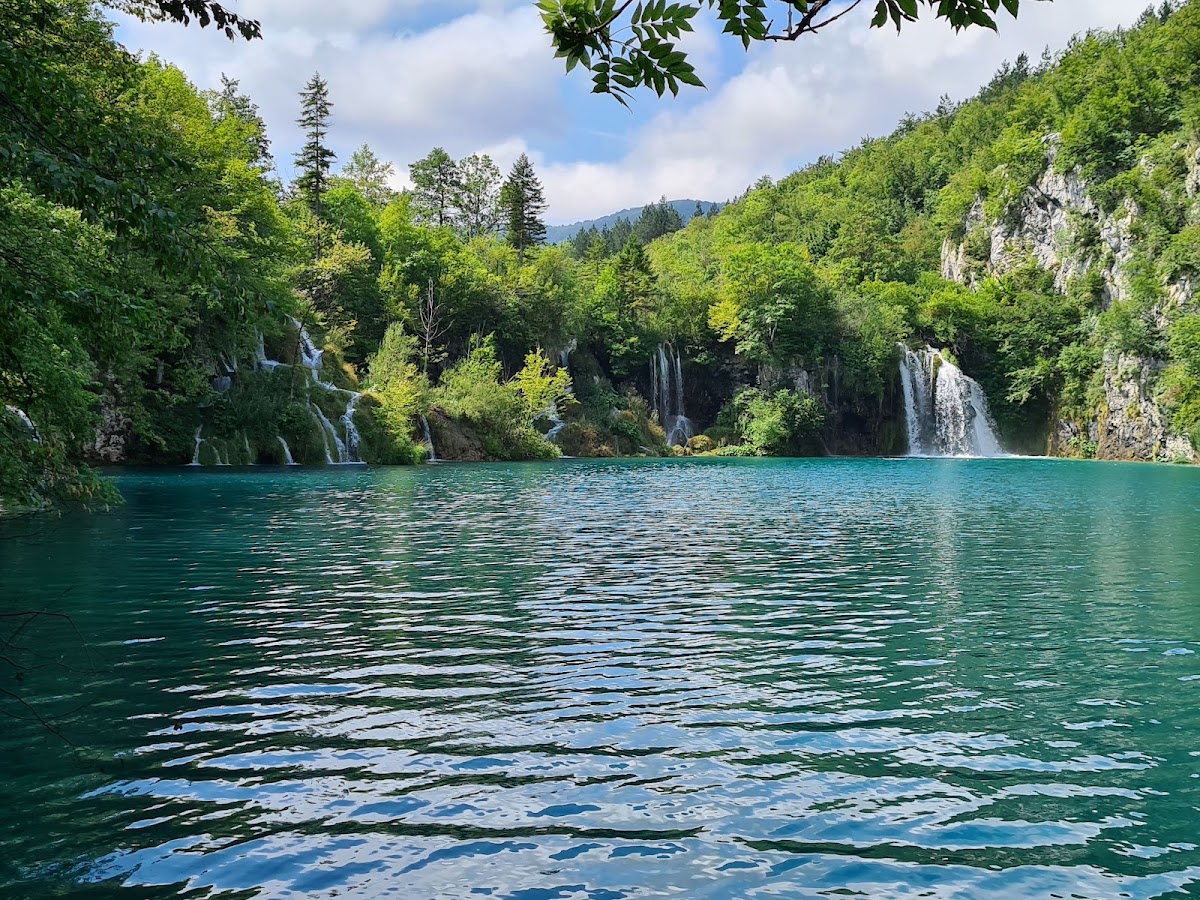
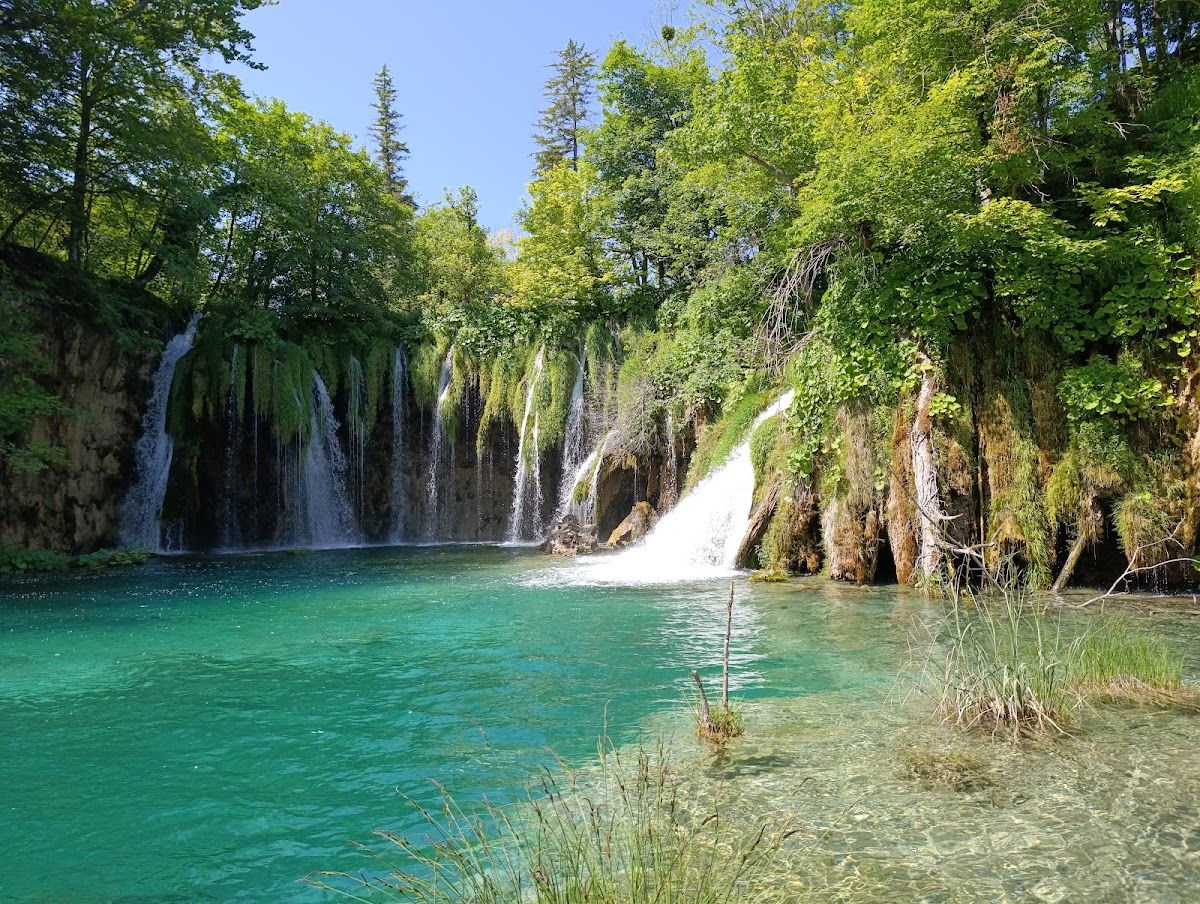
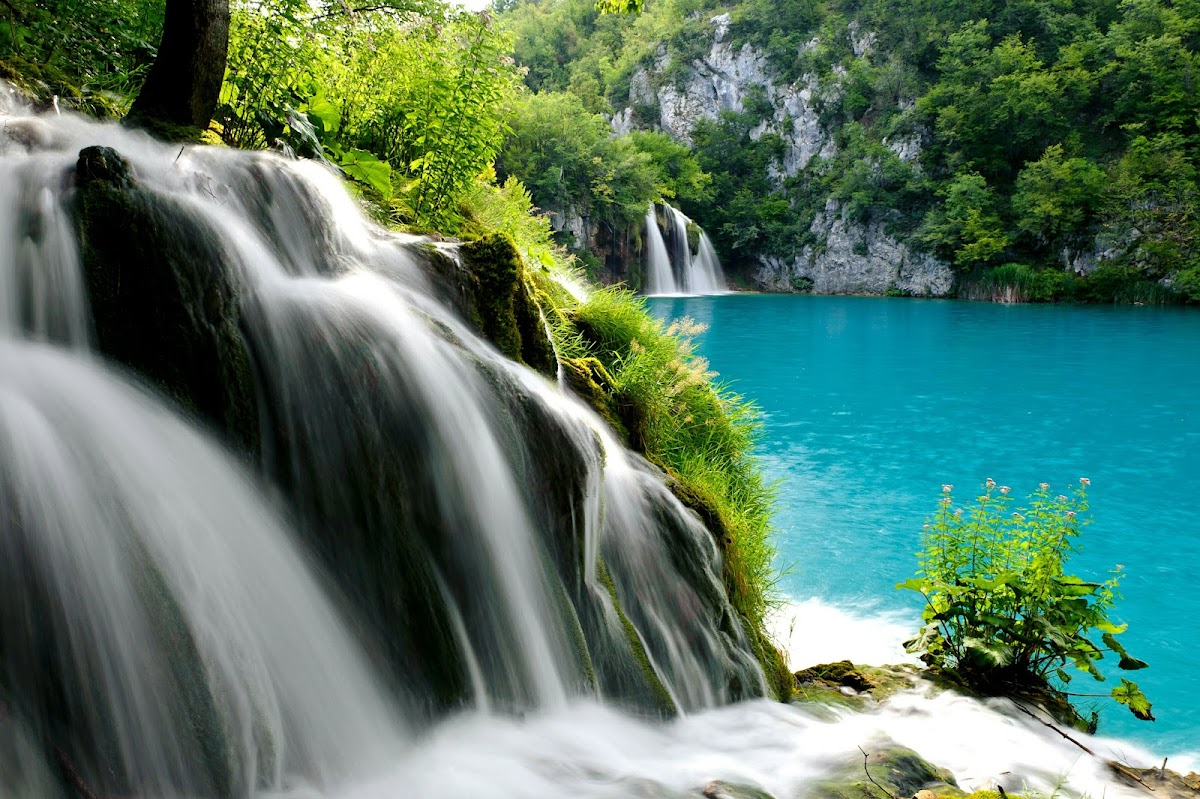
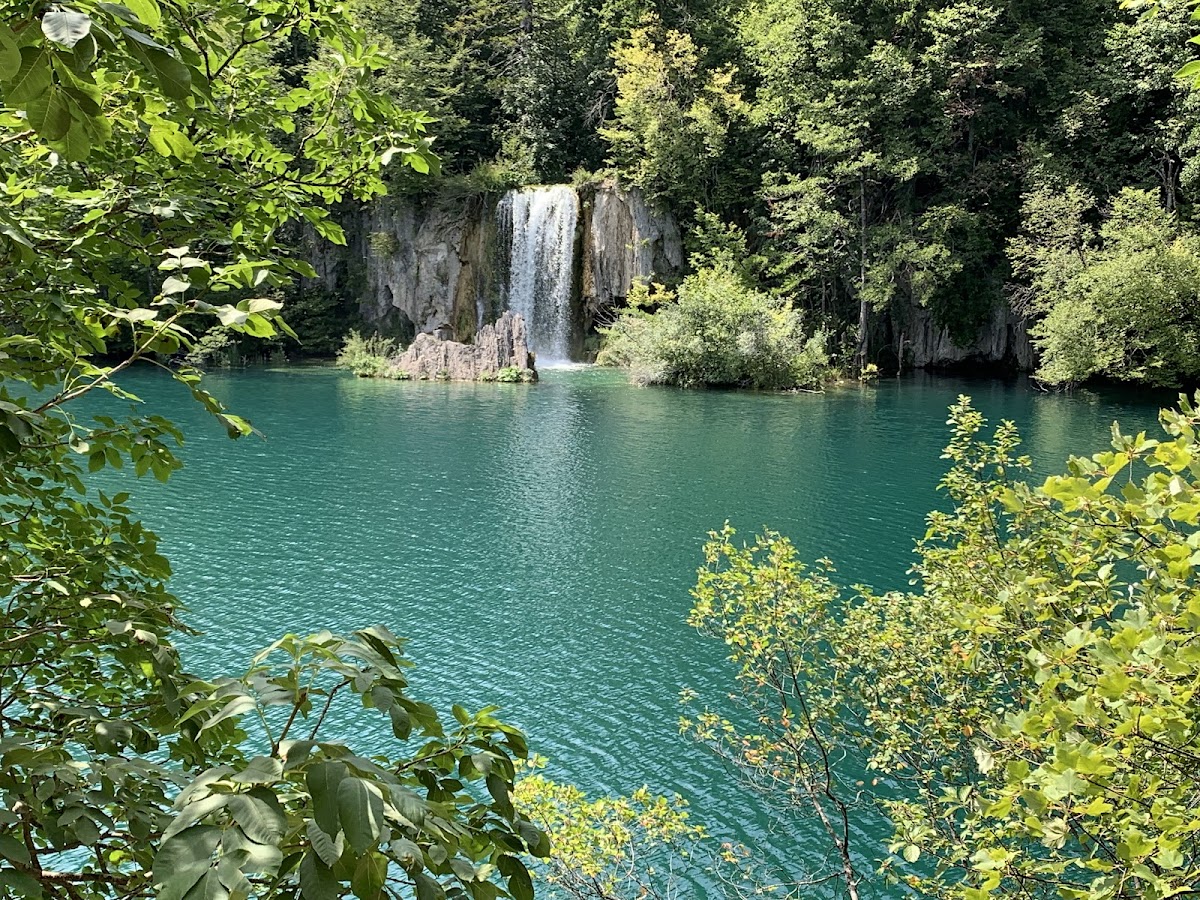
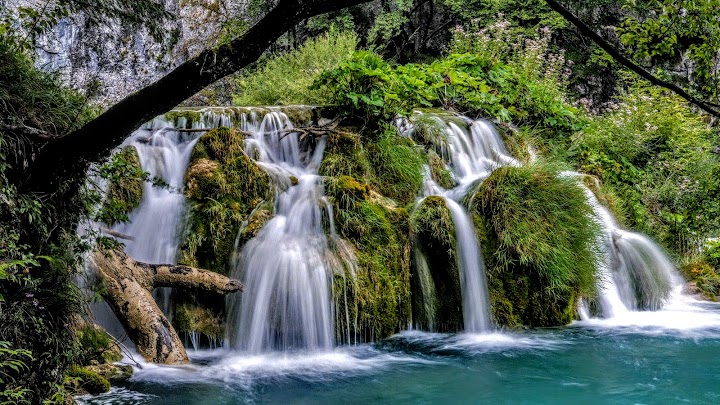
Both parks exist because of travertine — the same geological process drives them. Water flowing over limestone and dolomite deposits calcium carbonate through biological activity (moss, algae, and bacteria), gradually building natural dams and barriers that create cascading pools and waterfalls. This means both parks feature that signature Croatian look: crystalline water in impossible shades of turquoise, emerald, and blue, tumbling over mossy travertine barriers into pools below. If you've seen photos online and can't tell which park they're from, that's why.
Both parks are managed by the Croatian government as national parks, with similar rules around conservation: you stay on marked paths, you don't touch or remove anything, you don't feed wildlife, and drones are prohibited. Both parks charge entrance fees that vary by season, with peak summer prices reaching €40 for adults at each park. Both offer electric boat rides as part of the experience — at Plitvice the boat crosses Kozjak Lake (included in your ticket), while at Krka you can take optional boats to Visovac Island and the Roški Slap area.
The wildlife overlap is significant. Both parks support populations of European brown bears (though sightings are rare), deer, wild boar, and a wide range of bird species. Otters live along the waterways of both parks, and the forests in each support woodpeckers, owls, and various raptor species. If you're a birdwatcher, either park will deliver.
Both parks get crowded in summer. There's no way around it — from June through September, tour buses arrive by the dozen at both parks, and the most popular viewpoints and trails become congested. The strategies for avoiding crowds are similar at both: arrive early (ideally at opening), visit on weekdays rather than weekends, and consider shoulder season travel if your schedule allows.
Finally, both parks are genuinely beautiful in ways that photographs can't fully capture. The scale of Plitvice and the power of Krka's waterfalls both hit differently in person. Neither park will disappoint you.
Key Differences Between Plitvice Lakes and Krka
This is where the comparison gets genuinely useful. Despite the surface similarities, these parks offer fundamentally different experiences.
Size and Layout
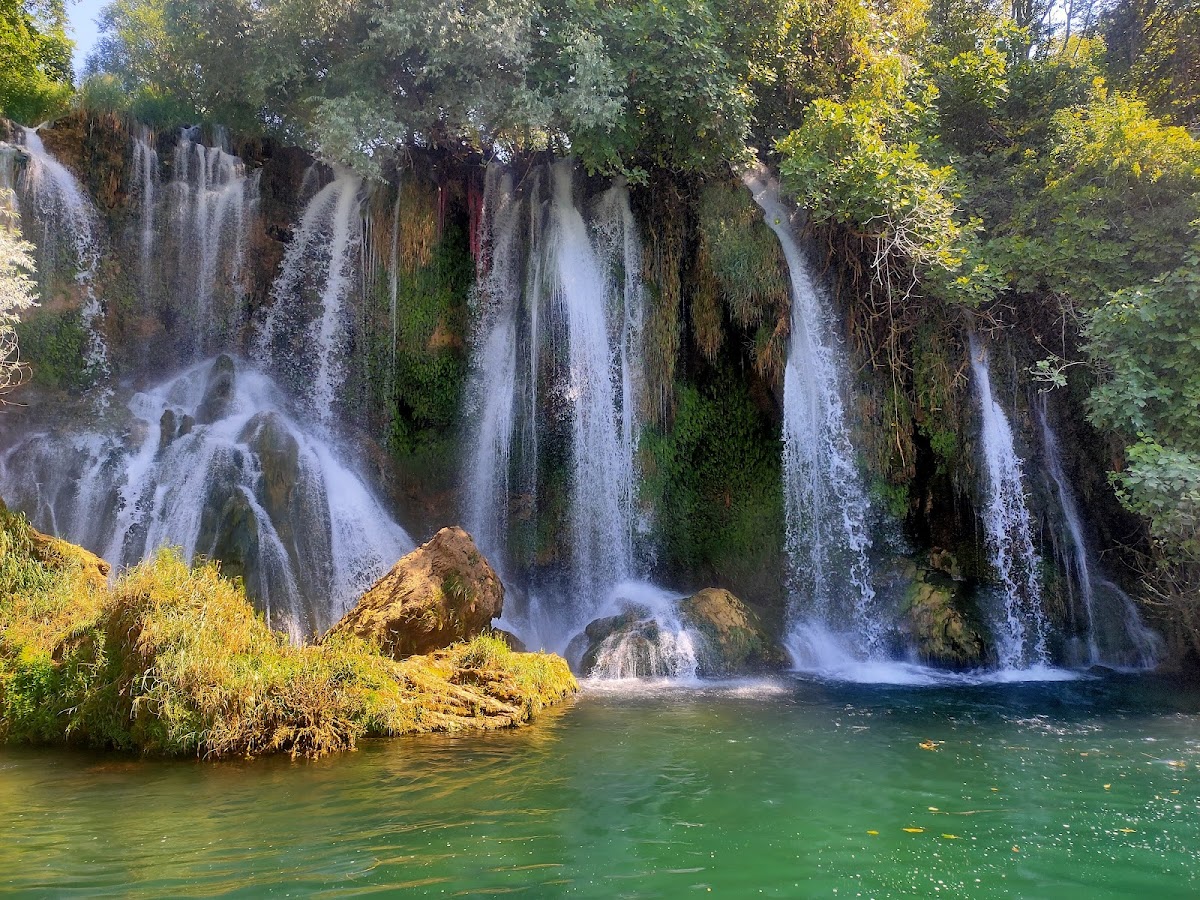
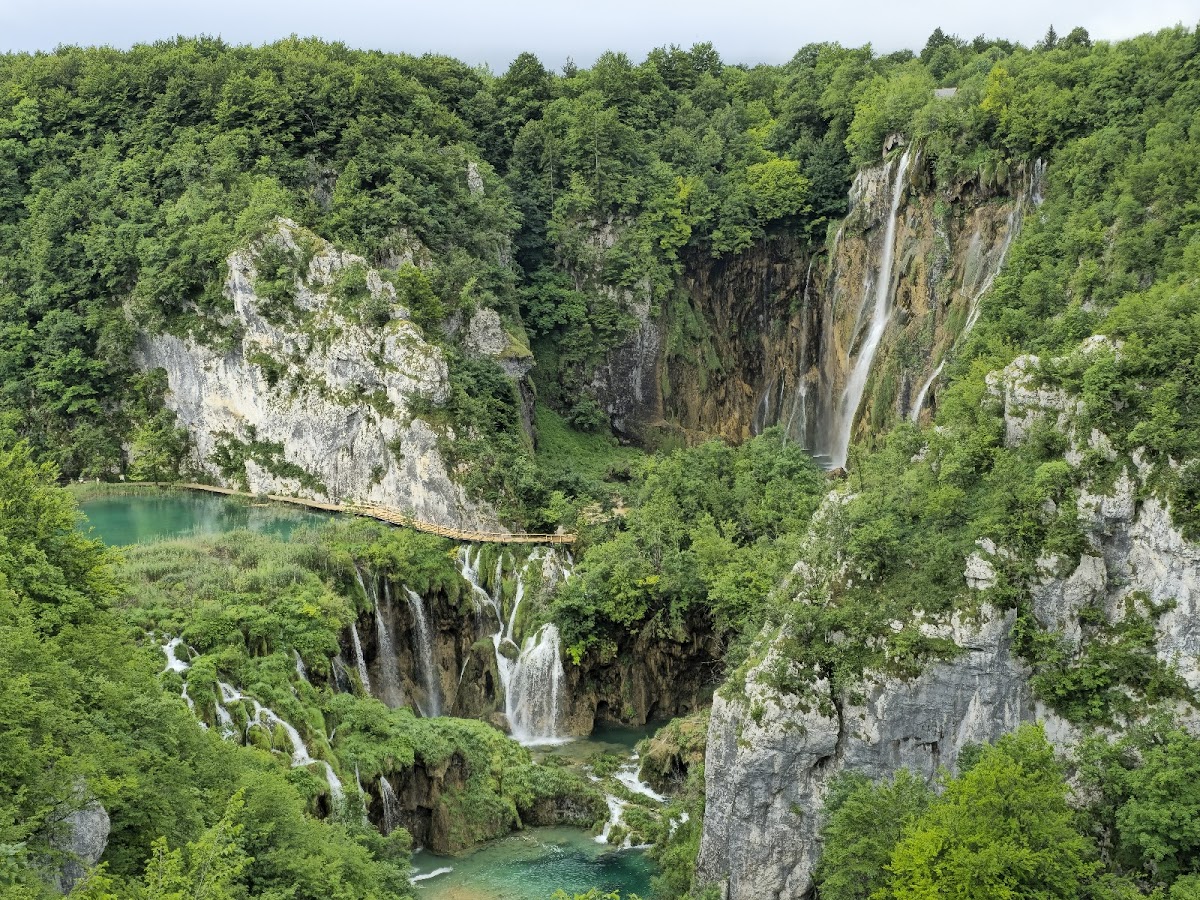
Plitvice Lakes is nearly three times the size of Krka — 296.85 km² compared to 109 km². But raw area doesn't tell the full story. What makes Plitvice feel enormous is the layout: sixteen interconnected lakes span approximately 8 kilometers from the highest point (Prošćansko Lake at 636 meters elevation) to the lowest (the Korana River canyon at 503 meters). You're hiking through this landscape on an extensive network of wooden boardwalks, forest trails, and lakeside paths, with the park offering eight official routes ranging from two hours to eight hours. There's a real sense of journey — of moving through distinct landscapes as you descend from upper lakes to lower lakes.
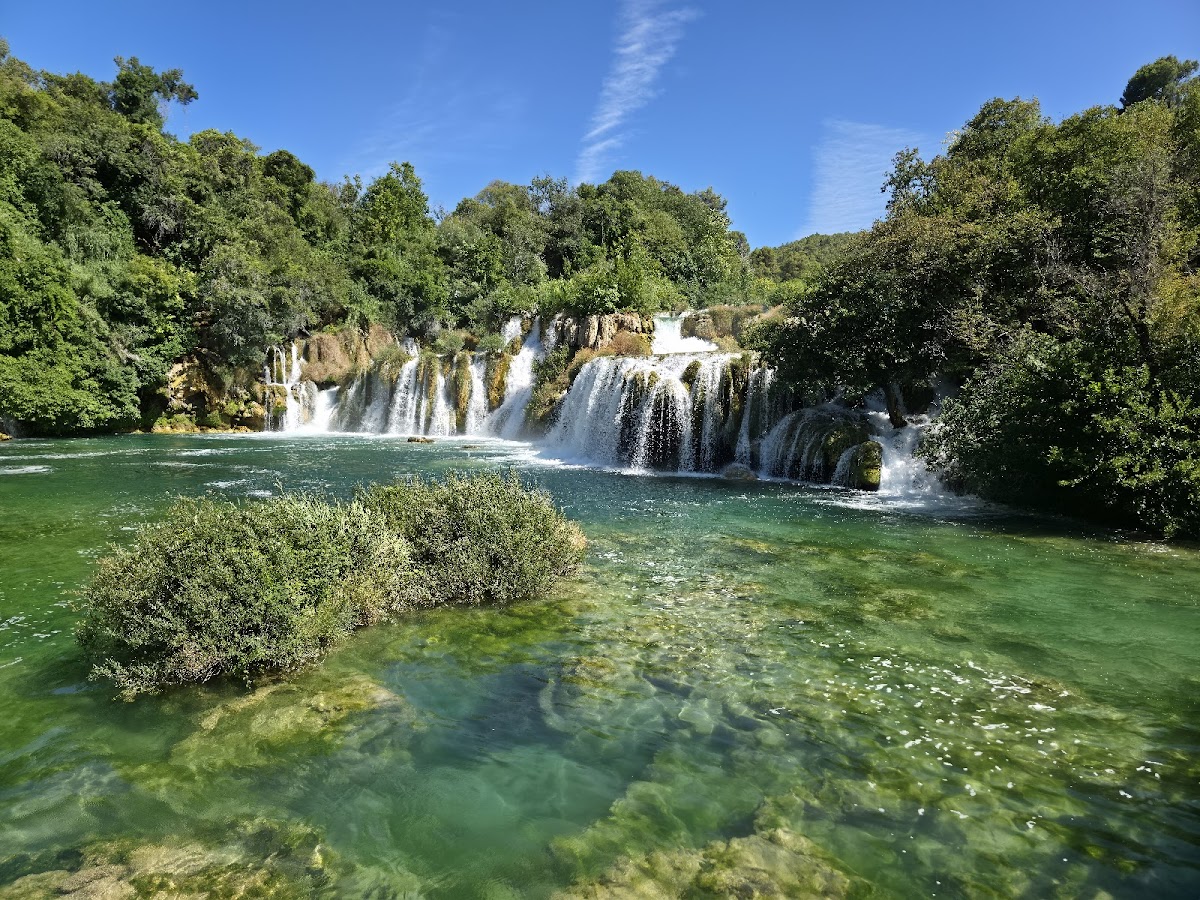
Krka, by contrast, is organized linearly along the Krka River. The main visitor experience centers on Skradinski Buk, the park's largest and most famous waterfall — a 17-step cascade stretching 800 meters with a total drop of 45.7 meters. The boardwalk trail around Skradinski Buk takes roughly 45 minutes to walk. You can extend your visit significantly by taking a boat to Visovac Island (a Franciscan monastery on a tiny island in the middle of the river) or continuing upstream to the Roški Slap waterfall area, but the core experience is more concentrated than Plitvice.
The takeaway: Plitvice is for people who want to spend a full day (or two) immersed in nature. Krka is for people who want a powerful waterfall experience in a half-day or less.
Crowd Levels and Visitor Experience
Both parks receive over a million visitors per year, but the crowd experience feels very different. Plitvice's 1.5 million annual visitors spread across a much larger trail network, meaning you can genuinely find quiet moments — especially if you choose longer routes or veer toward the upper lakes. The park's daily visitor cap (introduced to protect the ecosystem) means that on the busiest summer days, you might be turned away if you arrive too late.
Krka's roughly 1.2 million annual visitors concentrate heavily at Skradinski Buk, which means the main boardwalk trail can feel extremely packed during peak hours, even though the park's overall visitor count is lower. On a busy July afternoon, the wooden boardwalk around the main waterfall can be shoulder-to-shoulder.
Crowd-avoidance strategy: At Plitvice, arrive at Entrance 1 right at opening (7:00 AM in summer) and walk the lower lakes before the tour groups arrive. At Krka, enter from the Lozovac entrance early in the morning or consider visiting the less-crowded Roški Slap area instead of Skradinski Buk.
Accessibility and Physical Demands
This is an area where the two parks diverge significantly, and it's something most comparison guides overlook entirely.
Plitvice involves real hiking. Even the shortest official route (Route A, approximately 2–3 hours) requires walking on narrow wooden boardwalks, some with uneven surfaces and occasional steps. The elevation change across the park is 133 meters, and while you won't feel like you're mountain climbing, there are sustained uphill and downhill sections. Plitvice does have some accessible sections near the entrances and the panoramic train stops, but much of the boardwalk network is narrow (often single-file width) and lacks railings in places. Wheelchairs and mobility scooters cannot navigate most of the boardwalk system. Visitors with limited mobility should plan carefully and consider the boat across Kozjak Lake plus the accessible paths near Entrance 2.
Krka is considerably more accessible. The main Skradinski Buk boardwalk has been improved with wider paths and more gradual gradients. While not perfectly wheelchair-accessible throughout, it's significantly easier to navigate with mobility limitations than Plitvice. The terrain is flatter overall, and the shorter trail length means less cumulative physical demand. Families with strollers will also find Krka much more manageable.
The takeaway: If accessibility is a concern, Krka is the substantially better choice. If you're fit and enjoy hiking, Plitvice rewards you with a much more varied and immersive trail experience.
Seasonal Differences
Both parks look dramatically different depending on when you visit, but the seasonal impact plays out differently at each.
Spring (April–May): Plitvice is arguably at its absolute best — snowmelt creates maximum waterfall flow, and the forests are fresh and green. The upper lakes, fed by mountain streams, reach peak fullness. Krka is also impressive in spring with strong water flow at Skradinski Buk, but the overall spectacle of water volume across sixteen terraced lakes at Plitvice is hard to match.
Summer (June–September): Both parks are at their most crowded and most expensive. Plitvice's water levels drop but the lake colors intensify to their deepest turquoise. Krka allows swimming in designated areas during summer months, which is a significant draw that Plitvice cannot match. Summer is when Krka has a clear experiential advantage if cooling off in waterfall pools matters to you.
Autumn (October–November): Plitvice wins decisively. The surrounding beech forests transform into a palette of orange, red, and gold, reflected in the still lakes below. Krka's landscape is more Mediterranean (scrubby vegetation, less deciduous forest), so the autumn color show is far less dramatic.
Winter (December–March): Both parks are quiet and cheap. Plitvice in winter can be magical — frozen waterfalls, snow-covered boardwalks, mist rising off the lakes. Krka in winter is peaceful but less visually dramatic. Some trails and boat services may be reduced at both parks.
Activities Available
Plitvice offers:
- Eight official hiking routes (2–8 hours)
- Electric boat ride across Kozjak Lake (included in ticket)
- Panoramic train rides between zones (included in ticket)
- Cycling on designated roads outside the lake area
- Winter snowshoeing (when conditions allow)
- Wildlife observation (bears, deer, birds)
- Multiple viewpoints at various elevations
Krka offers:
- Main boardwalk trail at Skradinski Buk (~45 min)
- Swimming in designated areas (seasonal)
- Boat excursion to Visovac Island and monastery (extra fee, ~2–3 hrs)
- Boat ride to Roški Slap waterfall
- Ethno-village demonstration of traditional water mills
- Burnum archaeological site (Roman military camp)
- Krka Monastery visit (Serbian Orthodox, 14th century)
The activity comparison reveals an important distinction: Plitvice is primarily a hiking and nature park, while Krka blends nature with cultural and historical attractions. If ancient monasteries, Roman ruins, and traditional Croatian culture interest you alongside waterfalls, Krka offers more variety beyond pure nature.
Photography Opportunities
Both parks are photography goldmines, but they reward different approaches.
Plitvice is a landscape photographer's dream. The sheer number of compositions available — sixteen lakes at different elevations, waterfalls of every size from thin veils to thundering cascades, elevated viewpoints looking down across the valley, mirror-still lakes reflecting forests — means you could spend multiple days photographing and never repeat a shot. The boardwalks provide stable platforms right at water level, and the Upper Lakes area offers dramatic elevated perspectives. The travertine barriers create natural leading lines in compositions, and the water color varies from turquoise to deep emerald depending on depth and light angle. Autumn at Plitvice is particularly spectacular for photography, with the reflected fall colors creating painterly compositions.
Krka offers fewer compositions but some are spectacularly powerful. Skradinski Buk is one of Europe's most photogenic waterfalls — the sheer width of the cascade (800 meters across the full step system) creates dramatic wide-angle opportunities. Long-exposure photography of the main waterfall is rewarding, and the mist rising from the base creates atmospheric conditions. The Visovac Island monastery sitting in the middle of the river is a unique subject you won't find at Plitvice.
Best for photographers: Plitvice, by a significant margin, due to the sheer variety and number of subjects available. But Krka's Skradinski Buk is a world-class waterfall photography location in its own right.
Which Park Should You Choose?
The "right" park depends entirely on your situation. Here's our honest recommendation for different traveler types.
For Families with Children
Choose Krka. The shorter trail (45 minutes versus 4+ hours), flatter terrain, and option to swim make Krka dramatically more family-friendly. Kids get bored on long hikes, and Plitvice's narrow boardwalks with minimal railings can be stressful with small children. At Krka, children can splash in designated swimming areas during summer, explore the ethno-village, and enjoy the boat ride to Visovac Island — all within a half-day. Stroller access is also much easier at Krka.
That said, if your children are older (10+) and genuinely enjoy hiking, Plitvice's longer routes through diverse landscapes can be an unforgettable adventure. Just plan for the full day and bring plenty of water and snacks.
For Photographers
Choose Plitvice. It's not even close for serious landscape photography. Sixteen lakes, ninety-plus waterfalls, elevated viewpoints, forest trails, and an incredible autumn color palette give you more compositions in a single visit than most photographers can capture. If you're bringing a tripod and planning sunrise shoots, Plitvice rewards that level of commitment. Book accommodation nearby so you can enter right at opening and catch the morning light without crowds.
Krka is still worth a photography visit — Skradinski Buk is genuinely world-class — but it's a half-day photography spot versus Plitvice's multi-day potential.
For Budget Travelers
This one's a draw in terms of entrance fees — both parks charge €40 in peak summer and similar prices in shoulder and off-season. The real budget difference comes down to logistics.
If you're based on the Dalmatian coast (Split, Zadar, Šibenik), Krka saves you money on transport because it's closer — a day trip from Split to Krka is roughly 170 km round trip versus 480+ km to Plitvice. That's a significant saving on fuel, bus tickets, or tour costs. You also don't need to book accommodation near Krka since it's a comfortable day trip.
Plitvice almost always requires overnight accommodation nearby unless you're driving from Zagreb. Budget accommodation near Plitvice (guesthouses and private rooms) starts around €40–60 per night. Near Krka, you'd stay in Šibenik or Skradin, where prices are similar but you get a coastal town experience as a bonus.
Budget verdict: Krka costs less overall if you're coastal-based. Plitvice costs more but delivers more hours of experience per euro.
For Nature Lovers and Hikers
Choose Plitvice. If you love spending an entire day in nature, moving through varied terrain, and feeling genuinely immersed in a wild landscape, Plitvice is in a different league. The 8-kilometer descent through the lake system — from dense forests around the upper lakes, through the dramatic canyons of the lower lakes, past thundering waterfalls and mirror-still pools — is one of Europe's great nature walks. The park's size means you can find genuine solitude, especially on the longer routes.
Krka is beautiful but doesn't offer the same depth of hiking experience. The main trail is short, and while the boat excursions extend your time, they're not the same as walking through wilderness.
For Travelers with Limited Time
Choose Krka. If you only have a half-day or are squeezing a park visit into a coastal itinerary, Krka is the practical choice. You can see the main waterfall, walk the boardwalk, and be back in Split or Zadar within a few hours. Trying to do Plitvice in a half-day is frustrating — the drive alone from the coast eats your time, and rushing through the park feels wrong.
If you're near Zagreb with limited time, the calculus shifts — Plitvice is only two hours from the capital and you can still have a rewarding visit with one of the shorter routes (3–4 hours). But from the coast, Krka is the clear limited-time winner.
Can You Visit Both Parks?
Yes, absolutely — and we recommend it if your schedule allows. The two parks are different enough that visiting both doesn't feel repetitive. They're approximately 200 kilometers apart (roughly a 2.5-hour drive via the A1 motorway), making a combined visit entirely feasible.
Recommended 2–3 Day Itinerary
Day 1: Krka National Park
- Morning: Drive from Split or Zadar to Krka (1–1.5 hours)
- Visit Skradinski Buk boardwalk trail
- Optional: Boat excursion to Visovac Island (~2 hours extra)
- Optional: Continue to Roški Slap for a less-crowded waterfall experience
- Afternoon: Swim in designated areas (summer only)
- Evening: Stay in Šibenik or Skradin for the night — both are charming towns with good restaurants and coastal atmosphere
Day 2: Drive to Plitvice + Afternoon Visit
- Morning: Drive from Šibenik to Plitvice (approximately 2.5 hours via A1 motorway through Zadar)
- Afternoon: Enter Plitvice at Entrance 2, take the boat across Kozjak Lake, explore the upper lakes
- Evening: Stay in accommodation near Plitvice (Selište Drežničko, Rakovica, or Plitvička Jezera village)
Day 3: Full Plitvice Day
- Early morning: Enter at Entrance 1 right at opening for the lower lakes (fewer crowds, best light)
- Walk Route C, E, or H for a comprehensive experience (4–6 hours)
- Afternoon: Panoramic train back to entrance, depart for your next destination
Transportation Between Parks
- By car: The most flexible option. 200 km via A1 motorway, approximately 2.5 hours. Toll costs around €12–15 each way.
- By bus: No direct bus connects the two parks. You'd need to route through Zadar or Zagreb, adding significant time. Not recommended unless you have no other option.
- Organized tours: Some tour companies offer multi-day packages covering both parks from Split or Zadar, handling all transport and accommodation.
Which Order Is Better?
Visit Krka first, then Plitvice. Here's why: Krka is the smaller, more accessible park, and it serves as an excellent warm-up. If you visit Plitvice first, Krka can feel underwhelming by comparison. Going Krka → Plitvice means you build toward the bigger experience, and your trip ends on a high note. This order also works logistically if you're traveling north from the Dalmatian coast — you pass through Krka's territory before reaching Plitvice further inland.
Costs Comparison
Entrance Fees (2025/2026)
| Season | Plitvice (Adult) | Krka (Adult) | Plitvice (Child 7–18) | Krka (Child 7–18) |
|---|---|---|---|---|
| Peak (Jun–Sep) | €40 | €40 | €15 | €15 |
| Shoulder (Apr–May, Oct) | €23.50 | €20 | €10 | €12 |
| Off-season (Nov–Mar) | €10 | €7 | €4 | €4 |
| Children under 7 | Free | Free | Free | Free |
Note: Both parks include basic transport (boats, trains) in the entrance fee. Krka's Visovac Island boat trip is an additional cost. Prices are subject to change — check official park websites before visiting.
Accommodation Costs
- Near Plitvice: Budget guesthouses and private rooms from €40–60/night. Mid-range hotels €70–120/night. Limited luxury options.
- Near Krka (Šibenik/Skradin): Budget accommodation from €35–55/night. Mid-range hotels €60–110/night. Better variety including coastal apartments and boutique hotels.
Getting There
- Plitvice from Zagreb: ~130 km, 2 hours drive, bus tickets ~€12–18
- Plitvice from Split: ~241 km, 3 hours drive, bus tickets ~€18–25
- Plitvice from Zadar: ~132 km, 1.5 hours drive, bus tickets ~€10–15
- Krka from Split: ~85 km, 1.5 hours drive, bus tickets ~€8–12
- Krka from Zadar: ~80 km, 1 hour drive, bus tickets ~€7–10
- Krka from Šibenik: ~16 km, 20 minutes drive, bus tickets ~€3–5
Verdict and Recommendations
Both Plitvice Lakes and Krka National Park deserve their reputations as must-visit destinations in Croatia. They're not interchangeable — they offer fundamentally different experiences, and understanding those differences is the key to choosing well.
Choose Plitvice Lakes if you want the bigger, more immersive nature experience. If you love hiking, landscape photography, or simply spending an entire day moving through one of Europe's most remarkable landscapes, Plitvice delivers something genuinely extraordinary. It's worth the extra travel time and the overnight stay.
Choose Krka if you want a more relaxed, accessible park visit with the option to swim, explore cultural sites, and still have time for Croatia's coast. Krka packs remarkable beauty into a compact, manageable package, and its proximity to Split, Zadar, and Šibenik makes it logistically easy.
If you can visit both — do it. Start with Krka, end with Plitvice, and give yourself at least three days total. You'll experience two sides of Croatian nature that complement each other perfectly, and you'll understand why Croatia has earned its reputation as one of Europe's most naturally beautiful countries.
Frequently Asked Questions
Is Plitvice Lakes or Krka better?
Neither is objectively "better" — they excel at different things. Plitvice is the larger, more dramatic park with superior hiking and photography. Krka is more accessible, allows swimming, and offers cultural sites alongside natural beauty. Your choice depends on your priorities, location in Croatia, and available time.
Can you swim at Plitvice Lakes?
No. Swimming is strictly prohibited everywhere in Plitvice Lakes National Park to protect the fragile travertine ecosystem. This rule is actively enforced. If swimming near waterfalls is important to you, visit Krka instead, where designated swimming areas are available.
Can you still swim at Krka National Park?
Swimming at Krka's main Skradinski Buk waterfall was banned in 2021 to protect the environment. However, swimming is still allowed in other designated areas of the park, including at Roški Slap. Check current park regulations before your visit, as rules may change.
How far apart are Plitvice and Krka?
The two parks are approximately 200 kilometers apart by road. Driving via the A1 motorway takes roughly 2.5 hours. There is no direct bus connection between the parks — you'd need to route through Zadar, adding significant travel time.
How much time do you need at each park?
Plan a minimum of 4–6 hours for Plitvice, though a full day is recommended to see both the upper and lower lakes without rushing. For Krka, 2–4 hours covers the main Skradinski Buk trail comfortably. Add 2–3 hours if you want to include the Visovac Island boat excursion.
Which park is better for kids?
Krka is generally better for young children due to its shorter trails, flatter terrain, swimming options, and the engaging ethno-village exhibit. Plitvice's long boardwalks and lack of swimming can be challenging with small children. Older children (10+) who enjoy hiking may prefer Plitvice's adventure-like atmosphere.
Are Plitvice and Krka crowded?
Both parks get very crowded from June through September, especially between 10:00 AM and 3:00 PM. Plitvice receives roughly 1.5 million visitors annually, Krka about 1.2 million. To avoid the worst crowds at either park, arrive at opening time, visit on weekdays, or plan your trip for April–May or September–October.
Is Plitvice or Krka more accessible for wheelchairs?
Krka is significantly more accessible. The main boardwalk at Skradinski Buk has been improved with wider paths and gentler gradients. Plitvice's boardwalks are narrow, uneven in places, and involve elevation changes that make wheelchair access very difficult on most routes. Visitors with limited mobility should strongly consider Krka.
Do you need to book tickets in advance?
Advance booking is highly recommended for both parks during summer (June–September), when visitor caps can result in being turned away at the gate. Plitvice in particular has strict daily limits. During shoulder and off-season, walk-up tickets are usually available without issues. Both parks sell tickets through their official websites.
Which park is closer to Dubrovnik?
Neither park is particularly close to Dubrovnik. Krka is approximately 300 km away (about 3.5 hours by car), while Plitvice is roughly 450 km (about 4.5–5 hours). If you're based in Dubrovnik and can only do one, Krka is the more practical day trip, though it's still a long drive. Consider stopping at Krka as part of a journey between Dubrovnik and Split.